photos by Ian Christmann
Plant lupine, hollyhock or phlox and you may find iridescent-feathered hummingbirds frequenting your yard. Cultivating wild grape vines or crabapple trees can entice cardinals and bluebirds.
Fueled by a grant from the Quinnipiac River Fund, Audubon CT is teaming up with Urban Resources Initiative to demonstrate that, with just a little forethought, everyday plants chosen to beautify yards and parks near the Quinnipiac River can have added benefits for birds and other wildlife.
A surprisingly diverse variety of beloved bird species call the Quinnipiac area home, including great blue herons, robins, mockingbirds, cardinals, blue jays, golden finches, eagles, monk parakeets and more.
“Many birds, especially migratory birds are losing habitat and becoming threatened,” said Chris Ozyck, associate director of Urban Resources Initiative.“ Urban areas are critical, especially near rivers or estuaries.”
Common plants provide birds with food in the form of fruits, berries or nectar, and nesting places and materials. Equally important are plants that attract pollinators, such as bees, beetles, ants and butterflies, which bring their own winged beauty to the area.
To introduce the community to bird-friendly plants, Audubon and URI conducted public workshops: one with a public space focus, held at Dover Beach, and another geared towards people’s private yards and gardens. A pocket-guide to bird-friendly plantings was also made available in both English and Spanish.
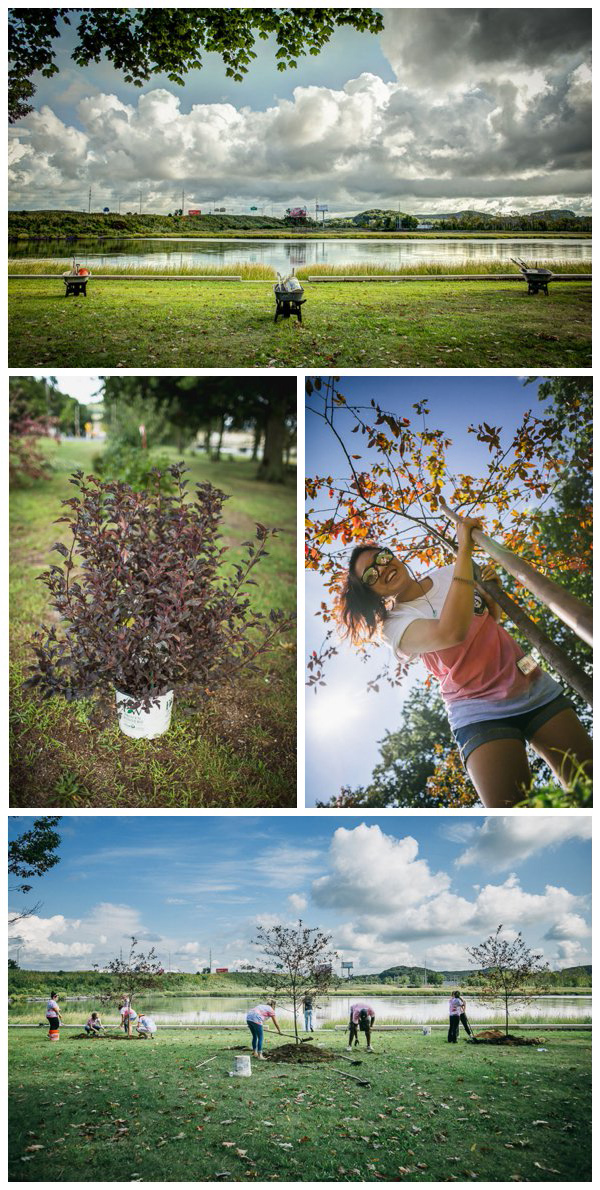
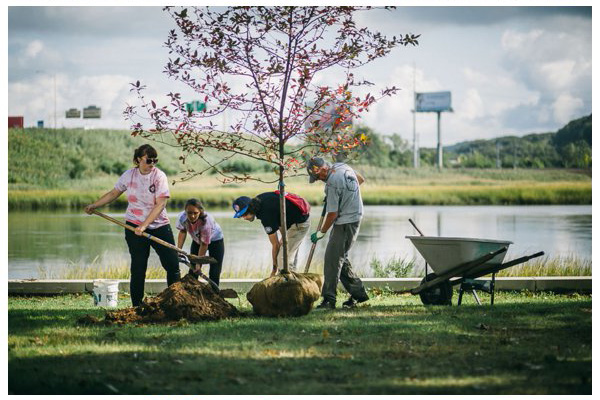
The Audubon/URI partnership supplemented these education efforts with a hands-on planting day on September 13, 2013. As part of a 9/11 Day of Service and Remembrance, more than a dozen volunteers from Americorps Vista, Americorps Alums and Peace Corps came out to make Dover Beach Park even more attractive for birds and people alike. New plantings included an oak, maple, crab apples and a plethora of shrubs and perennials.