Few Connecticut polluters penalized for toxic wastewater violations, EPA data shows

Nearly half of the 60 companies that are allowed to discharge wastewater directly into Connecticut’s rivers, brooks and other bodies of water exceeded the amounts of toxic metals or other pollutants that their permits allowed over the last three years, a C-HIT analysis of federal data shows.

Despite the violations, the state Department of Energy & Environmental Protection fined only two of the 29 companies found to be in noncompliance with their permits—a record that state environmental advocates called alarming, but that the agency said is justified.

The 29 companies discharged excessive amounts of pollutants during at least one three-month period from October 2013 to September 2016. At least 19 companies exceeded by more than 100 percent the amounts they were allowed to discharge, according to the U.S. Environmental Protection Agency data.

The data also show 23 of the 60 companies were found in noncompliance with terms of their permits for at least half of the three years—for reasons ranging from excessive discharges to submitting late discharge reports. Thirteen companies were found in significant noncompliance—the most serious level of violation—for three months or more.

While DEEP has the authority to fine or take court action against polluters, EPA records show it more commonly issues notices of violation or noncompliance or warning notices, opting to work with violators for months or years to correct the problems. Continue reading.

Mud Minnow Is Safe — For Now

NEW HAVEN INDEPENDENT — It lives in a river with a history of abuse and pollution. It swims in waters filled with hard-to-filter chemicals. Despite that discouraging environment, an expert told a riverine gathering, the male mummichog is in OK shape, for the time being.

Wallingford company reaches agreement with Quinnipiac River advocates

WALLINGFORD — A local river advocacy group rescinded a request to hold a public hearing on a discharge permit sought by chemical production company Allnex after working with state officials and company representatives on an agreement over the discharge of a previously unregulated chemical into the Quinnipiac River watershed.

Earlier this year, River Advocates of South Central Connecticut expressed concern that Allnex, 528 S. Cherry St., would be discharging tetrahydrofuran into the Quinnpiac River without regulation given the company’s past discharge violations.

The state Department of Energy and Environmental Protection’s discharge permit would only require the company to monitor the levels of the discharge, without a standard set to regulate its concentration in the watershed.

The advocacy group, helmed by state Rep. Mary Mushinsky, D-Wallingford, obtained enough signatures to request a public hearing before a new permit could be issued by the state. Continue reading.

Allnex permit application concerns river advocates

WALLINGFORD — Allnex’s application for a change to its waste water discharge permit has some river advocates calling for a public hearing after filings showed the chemical company had 17 discharge violations since February 2012.

Allnex wants to change its discharge permit because of plans to manufacture modified or new products at the South Cherry Street facility.

The products are similar to those already manufactured on site and will be produced with existing equipment. The modification includes monitoring for a new parameter, tetrahydrofuran, according to a report by the state Department of Energy and Environmental Protection. Tetrahydrofuran is a clear, colorless liquid used in adhesive and sealant chemicals, according to the compound summary on the National Institutes for Health website.

Continue reading

“Hot Pipe” across from State Park

The Connectiuct Dept. of Energy and Environmental Protection’s investigation into a discharge pipe across from the Quinnipiac River State Park concluded that the discharge was likely related to the accidental release of lubricating oil into a batch of cooling water. The pipe’s owner, Nucor Steel, was found in violation of not reporting a permit violation in a timely manner. No further action is expected.

The full report of the complaint investigation can be downloaded below.

Read the DEEP comment in The New Haven Independent.

Read the original story in The New Haven Independent.

Q River Pollution Mystery Solved

NEW HAVEN INDEPENDENT — Crews working the dashing Rock & Roll and other small boats from the several fleets that berth along Quinnipiac River in Fair Haven will not have to worry about a discharge upriver near Wallingford.

The mystery about what was in an effluent, or discharge, from a pipe up at Toelles Road, near the North Haven Wallingford border, has been solved.

Detecting Pollutants from “Hot” Pipe

Harry Pylypiw stumbled across a Quinnipiac River “hot spot” where previously undetected chemicals pour into fish-filled water streaming toward New Haven Harbor.

Now he wants to find out if we should worry about that. And if it’s legal.

For six years Pylypiw, a chemistry professor at Quinnipiac Univerity, and his students have been testing the Quinnipiac River fromt Wallingford down to New Haven Harbor for industrial contaminants.

They’ve found plenty of them, because companies are still allowed to discharge a limited amount of pollutants, by permit. Not until this year, however, did they find a genuine “hot spot.”

The spot is right next to a fishing spot and a state park.

Continue reading on The New Haven Indpendent.

Pollution Busters Hit the Q

Estrogen, fertilizers, plastic and heavy metals may kill entire species of fish in the Quinnipiac River—and limit humans’ dinner and recreation options. Unless four University of New Haven researchers succeed in sounding the alarm.

The four UNH researchers are testing the levels of a few pollutants along various sites of the 38-mile river, to find their sources and inform policy to reduce them.

Read the story in the New Haven Independent.

Phase III Quinnipiac River Trail Groundbreaking

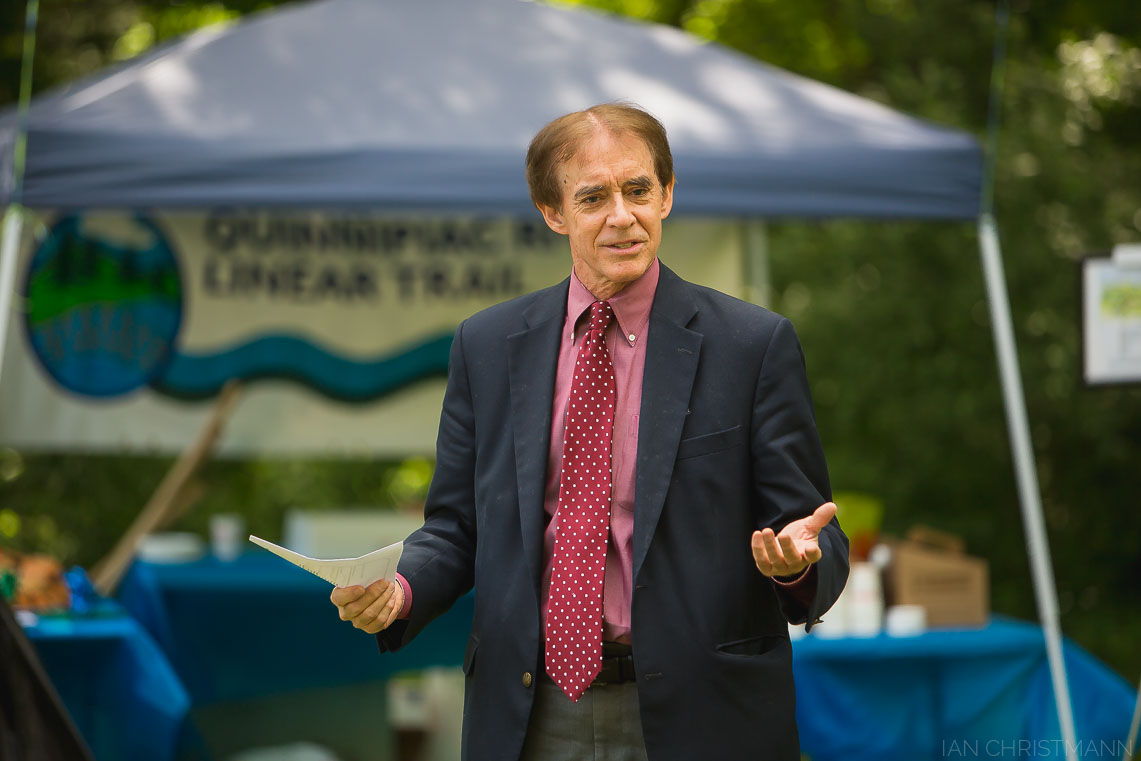
After more than a decade of waiting, work has finally begun on the Fireworks Island leg of the Quinnipiac River Linear Trail in Wallingford. An official groundbreaking ceremony was held on June 5 to honor the work of local volunteers, city officials, and funders of the project. Now that permits are in place, construction will commence on the section that will connect downtown Yalesville to the completed trail along Community Lake. When finished, the entire trail will stretch from border North Haven to Meriden.

Planning for the project, known as Phase III, began in 1998 with the first of multiple grants from the Quinnipiac River Fund at The Community Foundation for Greater New Haven.

“The Foundation was the first to believe in us. That first grant was enough to make it a real project and attract other funding sources,” said Mary Mushinsky, co-chair of the Quinnipiac River Linear Trail Advisory Committee.

Various delays turned the project into an odyssey. The completed hydrology studies and engineering designs had to be redone after an endangered plant, false mermaid weed, was discovered at the location of the planned bridge crossing.

Trail planners encountered a second roadblock when the Yalesville on the Green condominiums refused to allow pedestrians to walk over the existing bridge to the state-owned Fireworks Island property. In October 2014, the state awarded a $150,000 grant to construct a separate 208-foot pedestrian bridge. The total cost of the third phase is expected to be $2.8 million.

Now that permits are in place, work is set to proceed this summer.

“We never gave up,” Mushinsky said.

Wallingford Mayor William Dickinson, Jr

Quinnipiac River Linear Trail Advisory Committee

Wallingford Town Engineer John P. Thompson

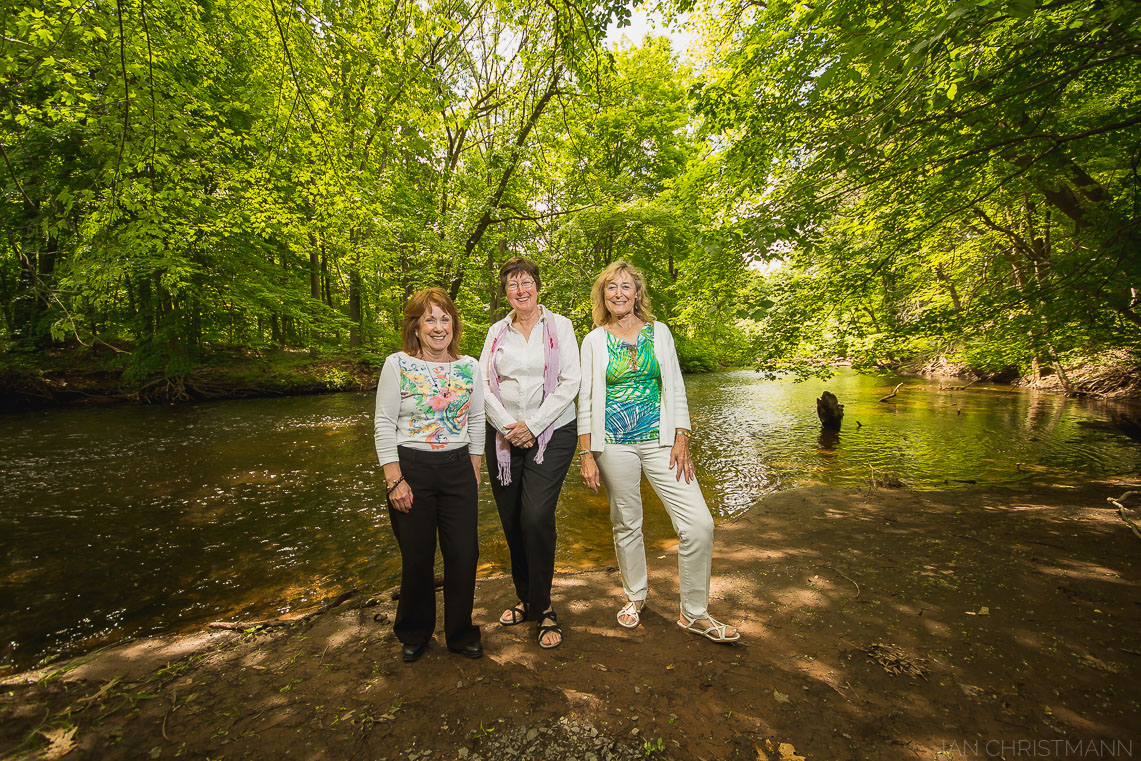
Advisory Committee Co-chairs Cathy Granucci and Mary Mushinsky, and Treasurer Elaine Doherty

Photos by Ian Christmann