Fishing for Toxins

Research scientists from area universities detect and measure the impact of chemical pollutants in the Quinnipiac River

A vast number of products used and relied on everyday are made possible because of modern chemistry — from television sets and mobile phones, to plastic bottles, detergents, weed killers, hospital equipment, and just about everything in the typical American medicine cabinet. Qualities such as hardness for mobile phone covers and flexibility for intravenous tubes are achieved with materials created out of chemical compounds formed in a laboratory. The use and production of these synthetics has grown exponentially since World War II and brought undeniable benefits.  But many of the chemical building blocks used to make these materials are potentially harmful to humans and wildlife in ways that scientists are only beginning to understand.

In Greater New Haven, research scientists from area universities are conducting an array of studies to determine the extent of chemical pollutants in the Quinnipiac River watershed. Supported with grants from the Quinnipiac River Fund, some are working to identify point sources, typically the discharges of factories and water treatment facilities. Other teams are trapping specific animal species that live in and around the Quinnipiac River to determine whether the chemicals exist in high enough concentrations to affect biological systems that are shared with humans.

The compounds being studied are known as endocrine disrupting chemicals, or EDCs. The more well known of these compounds include dichlorodiphenyltrichloroethane, or DDT, the pesticide that was banned for most uses in 1972, and Bisphenol A, or BPA, which has been used in baby bottles and the lining of cans of food.

The chemicals get their name because they can interfere with the normal functioning of the endocrine system. A network of glands and organs throughout the body, the endocrine system is responsible for many aspects of a person’s overall health.  It produces the hormones necessary for normal sexual development and fertility, balanced energy levels and metabolism, childhood immunity, bone growth, and other vital functions.

Research sponsored by the National Institute of Health is investigating links between EDCs and illnesses including various cancers, diabetes, low fertility, immune disorders, and neurological defects. The NIH states that endocrine disruptors may pose the greatest risk to the developing organs during prenatal development and infancy.

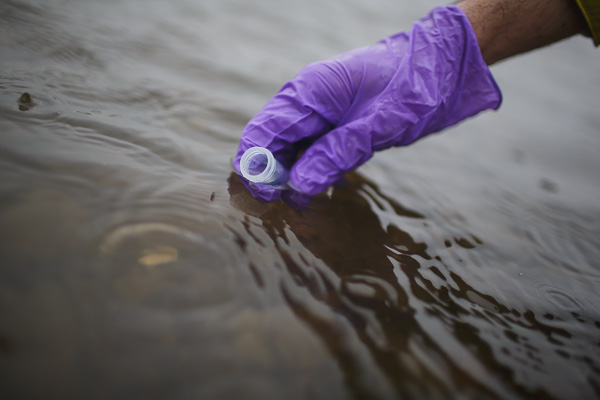
Along multiple points of the Quinnipiac River, a research team lead by Quinnipiac University Professor of Chemistry Harry Pylypiw has tested the water to identify the point sources several endocrine disruptors known as phthalates. The team paid particular attention to the presence of Diethylhexyl phthalate (DEHP), a plasticizer manufactured by the Wallingford company Cytec Industries for use in medical devices, syringes, IV bags, glo sticks, hydraulic fluid, and other products.

While the river was found clean at Hall Avenue, above the Walllace Dam, lower down at Toelles Road, near a discharge site for Cytec, testing found DEHP as well as Dibutyl phthalate (DHP), a chemical used in detergents, cosmetics, aerosol fragrances, and toothbrushes. What surprised Pylypiw was his discovery of phthalate compounds further down river, far from any known discharge points.

“What disturbed us was what we found in the tidal marshes,” said Pylypiw. “There is no dumping there, so it has to be migrating.”

Household waste, seepage from underground septic systems, and other non-point sources are equally significant contributors of EDCs in the environment. In freshwater ponds in suburban areas around the Quinnipiac River, Yale research biologists are measuring how the chemicals are affecting local frog populations. Previous studies have found some of the highest EDC concentrations near suburban homes reliant upon septic systems.

“There is a halo of chemicals around everywhere we live,” said David Skelly, Ph.D.Yale School of Forestry and Environmental Studies. “Wastewater treatment is not equipped to deal with these 21st-century EDCs.”

Skelly’s team has found evidence of endocrine disruption in local frog populations. One in five frogs sampled by the researchers had eggs in their testes. In an ongoing project, the team is studying mussel populations in Long Island Sound, the first such examination of endocrine disruption in this body of water.

On the Quinnipiac River, John Kelly, a research biologist with the University of New Haven, is leading a study that seeks to determine if endocrine disruption is happening to fish and the patterns for where EDCs are more or less concentrated. For his testing, Kelly’s team is examining the mummichog, a small, silvery fish that lives in brackish water. The presence of endocrine disrupting chemicals in the fish will turn on cellular machinery to produce certain proteins in the liver that can be measured. By detecting these proteins in the fish livers, Kelly can establish that endocrine disruption is occurring.

Kelly’s study is ongoing and is anticipated to have results in the spring of 2015. 

Taking Ground

New Haven Land Trust battles invasives by planting new native trees 

photos by Ian Christmann

“You can never declare victory,” said John Cox, a longtime New Haven Land Trust volunteer, speaking about the battle against invasive plant species that have overrun Quinnipiac Meadows and New Haven’s other five preserves. “You constantly have to be diligent in the process of removing invasives and replacing natives.”

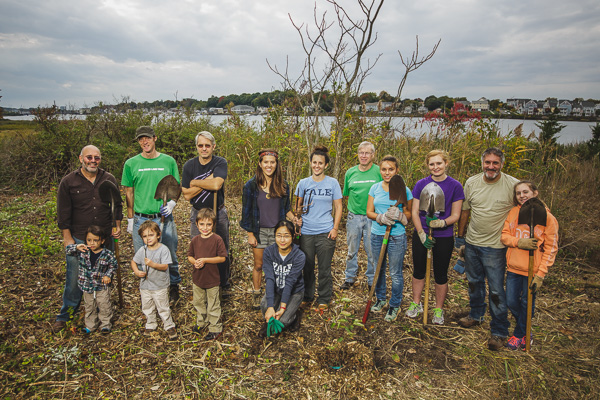
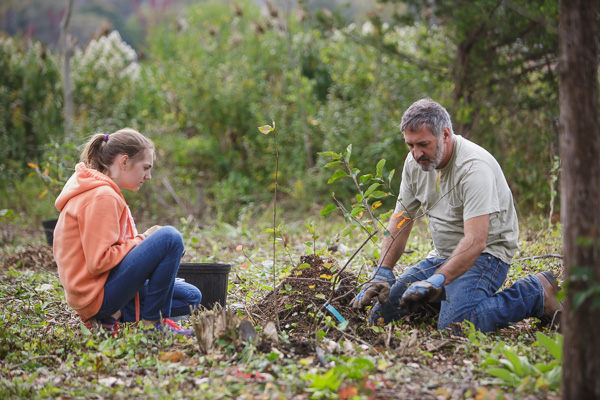
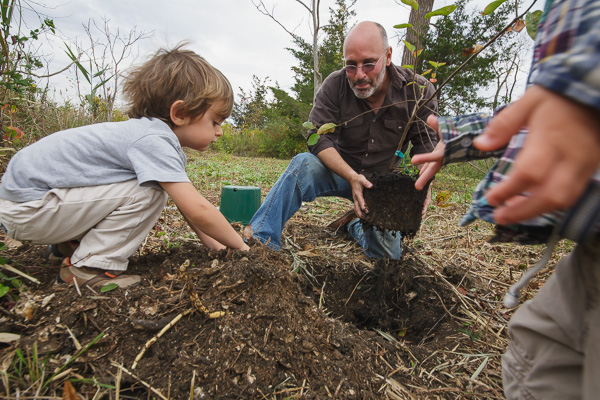
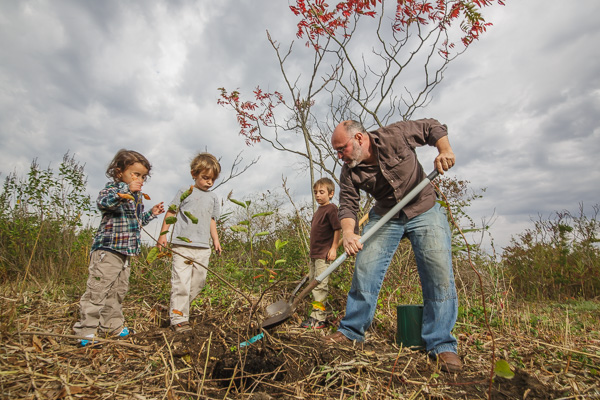
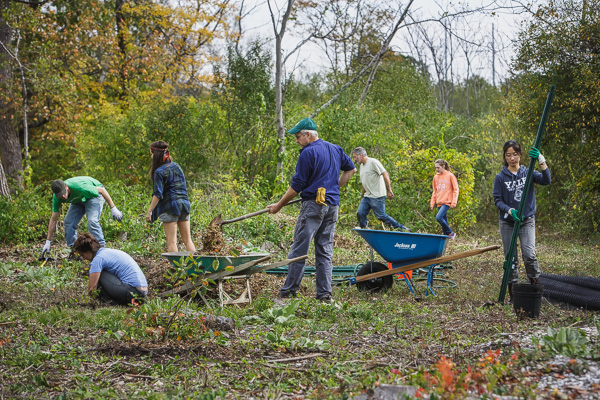
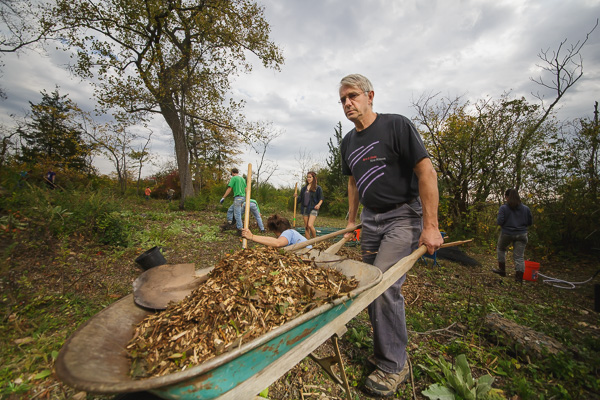
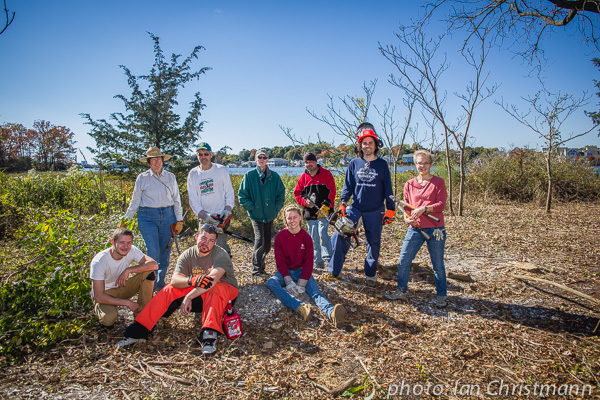
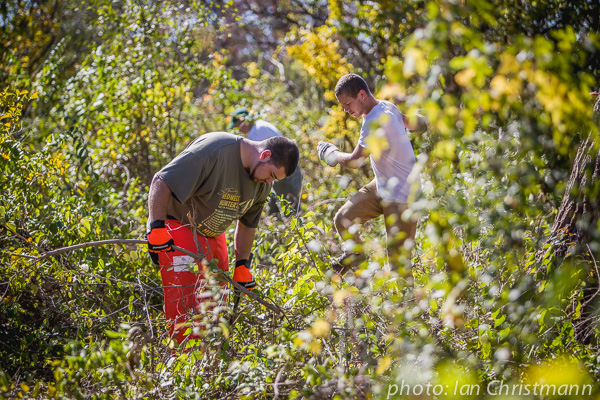
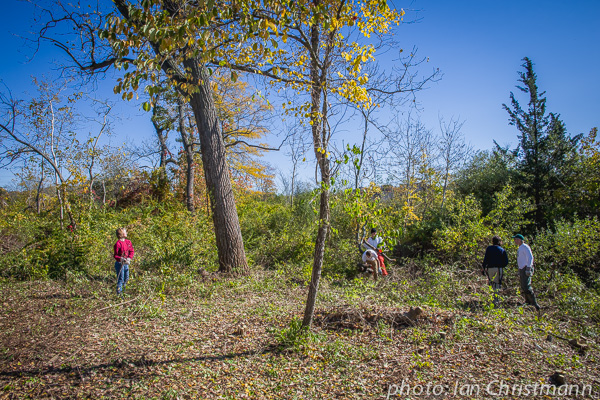
On Saturday October 18, a dozen volunteers demonstrated this diligence, joining Cox and New Haven Land Trust staff to plant native trees and shrubs at the Quinnipiac Meadows Preserve.  Scheduled on United Way’s Day of Caring, the planting drew regulars like John, fellow preserve committee member Steve Wilcox and his daughter, as well as new faces, many of them from Yale University.

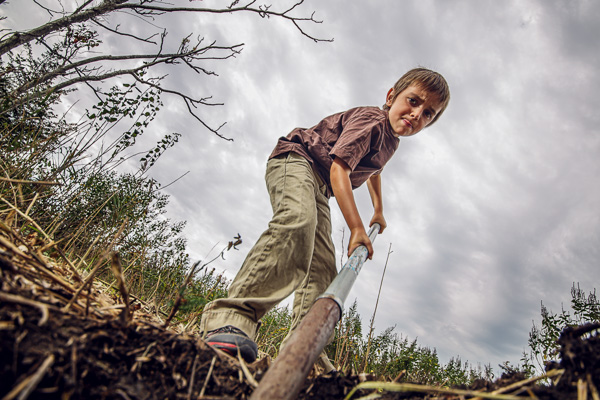
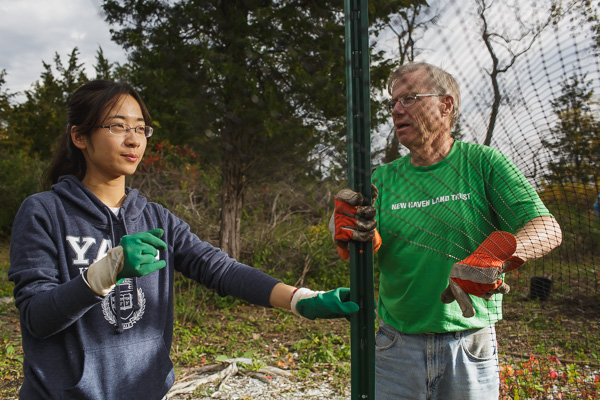
Armed with pickaxes, shovels and mulch, the group sowed 29 plants, including numerous serviceberry bushes and three species of oak trees. The work concluded with the construction of temporary fencing to protect the fledgling plants from deer.

“These workdays not only improve our ecosystem, but bring people together to learn about the preserve and better appreciate our community,” said Justin Elicker, executive director of the Land Trust. “There is no better way to meet someone than planting a tree together.”

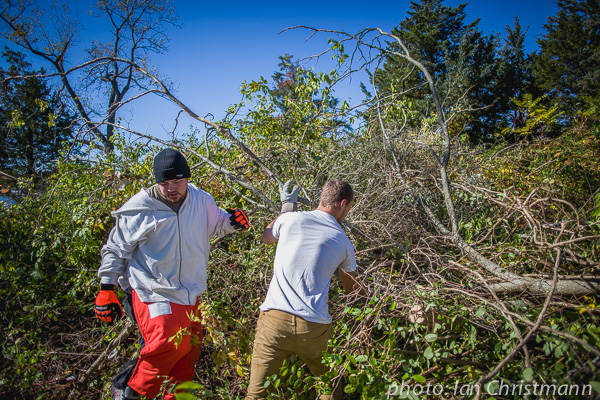
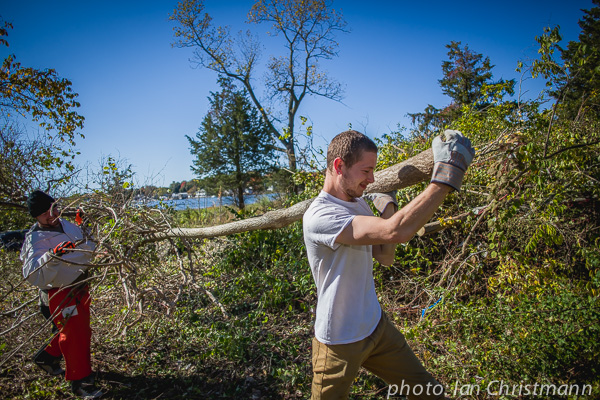
Saturday’s planting was part of a much larger process of re-establishing native species in the preserve. In the fall of 2013, volunteers cleared the 1.2-acre area. Due to rapid re-growth of the invasives, the land was re-cleared last Wednesday.

Even after the native plants establish themselves, the battle to keep the invasives at bay will continue. It’s good guys vs. bad guys when it comes to plant species, Cox explained. Invasives are non-native plants that are considered disruptive to the environment and human economy. Some can even be harmful to human health.

As their name indicates, invasives are naturally aggressive. They grow rapidly under a wide variety of conditions and spread easily. Some can sprout from the smallest fragment of a root, making their eradication difficult. Invasives also leaf out and flower early, shading out the native species. A lack of natural controls on growth – such as diseases, insects or wildlife predators – also contributes to their proliferation.

When invasives invade, native plants suffer. According to the National Wildlife Federation, invasive plant species are one of the leading threats to native wildlife, putting approximately 42% of the threatened or endangered species at risk of extinction. Likewise, invasive species can greatly impact human economy as many commercial, agricultural, and recreational activities depend on healthy native ecosystems.

Understanding the serious implications of invasive, the New Haven Land Trust and its volunteers will continue to take ground in Quinnipiac Meadows – protecting the native plants as they get established and expanding their efforts to additional acres.

The invasive removal and tree-planting project was partially funded by the Natural Resources Conservation Service and the Quinnipiac River Fund.

Three rivers run through it

Three rivers run through it. 

New Haven might not be known as a river city, but in fact it boasts three – the West River, Mill River and Quinnipiac River. A natural buffer for urban dwellers, they offer scenic beauty and access to nature walks and boating. They provide critical habitats for birds, fish and other wildlife. Yet despite their importance and allure, these rivers have suffered substantially from industrialization and urban development – impacts not caused by New Haven alone. The rivers flow through a dozen other towns and municipalities before entering New Haven, including Bethany and Woodbridge to the west and Meriden and Wallingford to the northeast.

In recent decades, strides have been made to stem the tide of pollution. Stricter regulations and mandatory permitting has helped to protect rivers to some degree. But are permits really doing enough?

Taking this question to heart, the Mill River Watershed Association is creating an important new tool to help people understand and use the permit process to protect New Haven’s rivers. Empowered by a $20,000 grant from the Quinnipiac River Fund, the Urban Rivers Permit Project will provide a comprehensive catalog of permits and permit-related regulations for the entire length of each river that flows through New Haven. A single source of permit information will empower river advocates to identify areas of concern and speak out for stronger regulation. The catalogue will include specific discharge and diversion permits, the dates when these permits come up for renewal, and contact information for the associated regulatory agencies. The report will also include summaries of each municipality’s current land use regulations related to waterfront development.

“I don’t think anybody has ever pulled it all together before,” said Mary Mushinsky who is leading the research. “And now I know why.” The report quickly grew to more than 40 pages and includes listings for at least 6 industrial discharges, 6 public sewage treatment plants, 477 stormwater permits, 11 diversion permits, as well as pre-existing diversions in 10 different streams flowing to these rivers.

Industries that discharge or divert water are the most obvious potential sources of pollution. Harder to pinpoint and monitor are the more widespread and debilitating affects of land use development. Polluted runoff from parking lots, roads and other impervious surfaces ultimately flows into the rivers, raising bacteria counts and causing violations of various other water quality standards. The Urban Rivers Permit Project hopes to encourage towns with fewer regulations to adopt best practices that can protect and improve rivers. Even a small regulatory change, such as a requirement that subdivisions leave vegetated buffers near waterways, can make a big difference.

The volunteer-led Mill River Watershed Association was formed in 1999 when the Lake Whitney Water Treatment Plant was first proposed. While they still champion the Mill River, their focus has broadened to include empowering effective advocacy for all of New Haven’s rivers – a fitting aim for the Association’s proposed new name: River Advocates of Greater New Haven.

Mill River Watershed Association’s president Cordalie Benoit

A concrete concern


photos by Ian Christmann

Made infamous by the movie Erin Brokovich, the compound hexavalent chromium is a classified carcinogen, of controversial concern in drinking water as the film’s storyline reveals.  But what, if any, impact does it have on the ecosystems of non-drinking source waterways, such as the Quinnipiac River?

Prior to the 1990s, hexavalent chromium was widely used in industry. Today, it is mainly used in electro-plating, leather-tanning, wood preservation and the manufacture of plastic and dyes. Hexavalent chromium is most dangerous when chronically inhaled through dust, fumes or mist, a risk in “hot work” such as welding stainless steel or the use of certain spray paints and coatings. When it comes to hexavalent chromium’s impact in water, many questions still remain. Soluble compounds are a weaker carcinogen, however, according to a 2011 study of hexavalent chromium in drinking water, published by California’s Office of Environmental Health Hazard Assessment, “there is now sufficient evidence that hexavalent chromium is also carcinogenic by the oral route of exposure, based on studies in rats and mice conducted by the National Toxicology Program.”

Empowered by a grant from the Quinnipiac River Fund (a component fund of The Community Foundation for Greater New Haven), Yale University is helping shed further light on hexavalent chromium by measuring its concentration in storm water run-off in the Quinnipiac River watershed.

During heavy rains, water drains off large impervious surfaces, such as parking lots and roads, throughout Central Connecticut. Much of it eventually exits into the Quinnipiac River. In the past, combined sewer overflows brought all sewer water (both rain and sewage) to be treated in sewage plants. Unfortunately, with heavy rain conditions, the systems often overflowed, allowing raw sewage into rivers. New laws required sewer separation, bringing only raw sewage to treatment plants and draining rainwater directly to rivers and water bodies. Sewer separation solved the problem of sewage overflows, but created a new unique problem: heavy metal pollutants, such as hexavalent chromium, in surface run-off are being deposited, untreated, into the river.

Not only do large paved areas transport pollutants, but when it comes to hexavalent chromium, the concrete itself is a suspected source of the compound, making the highly developed Quinnipiac River watershed a perfect testing ground. Results of the testing are confirming concrete as a source, with higher concentrations of hexavalent chromium being found in watershed’s tributaries that are downstream of areas with more urban land cover, a relationship that is especially clear while it’s raining.

The Quinnipiac River Fund awarded Yale University a grant in March of 2013 to support the measurement of hexavalent chromium concentrations and chemical behavior in storm water within the watershed and in the River itself. The Fund has supported numerous research studies of chemical pollution in the River and its effects on species of flora and fauna that call the Quinnipiac home.

Three New Haven Companies to Pay Fines for Violation of Polution Control Laws

The Associated Press recently reported that a court has ordered three New Haven companies and their operator to pay nearly $750,000 in penalties for violations of the state’s hazardous waste and air pollution control laws.

Bruno Suraci Jr. operates the metal finishing businesses at two locations in New Haven, including one along the Quinnipiac River.

The state of Connecticut had alleged violations including improper storage, lack of proper permits and failure to conduct inspections. State officials say employees, the public and the environment were exposed to serious risks.

Click here for more information.

A preserve within a preserve

Volunteers clear invasive plants from Quinnipiac Meadows

A preserve within a preserve

From 1-91, the strip of land looks like a golden wild island in the River. Although it is actually connected to land, the 35-acre Quinnipiac Meadows/ Eugene B. Fargegorge Preserve serves as an island of sorts: a serene oasis of plant life and wildlife amid the surrounding bustle of houses and highways, billboards, condos and shopping centers.

With ospreys and owls, herons, fox and terapin, wildlife abounds in the preserve, but the land’s true potential is being compromised by threat that many never notice: invasive plant species. Aggressive, weedy trees and shrubs have created a dense thicket in areas of the preserve. In the upland portion in particular, three invasive shrubs — bush honeysuckle, buckthorn, and autumn olive — dominate the land,  smothering the native trees, such as eastern red cedar, winged sumac, and eastern cottonwood, that make the area unique.

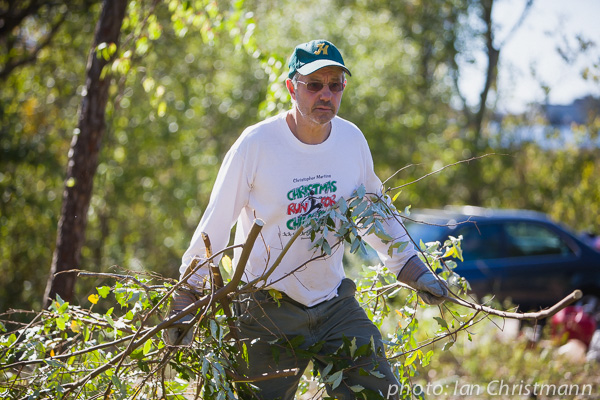
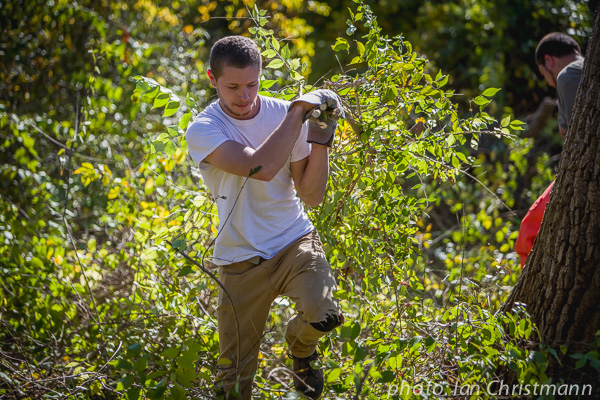
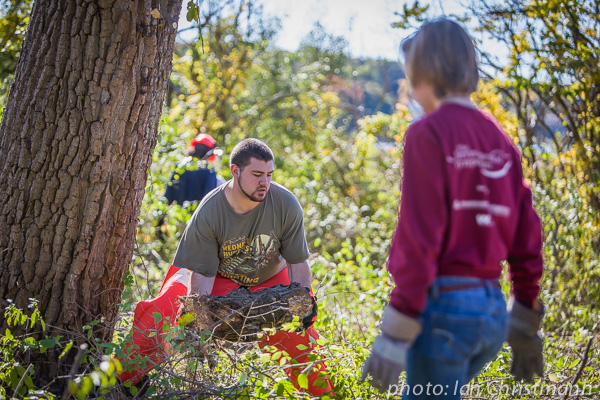
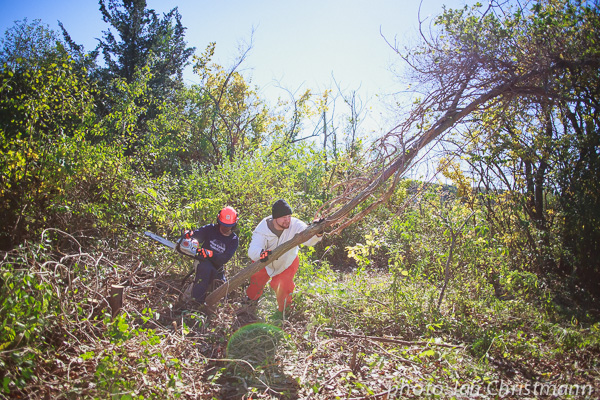
The New Haven Land Trust is working to create a preserve within the preserve, clearing and suppressing the invasives so the coastal riparian plant community can thrive. On October 13 and Oct. 20, dedicated groups of volunteers rose to the labor-intensive occasion. Donning long pants, close-toed shoes and work gloves, they wielded chainsaws and machetes to clear an overgrown 1.2 acre area near the bird blind overlooking the salt marsh and river.

“In an urban environment, preserving the few natural places that we do have is critical,” said JR Logan, volunteer and board president for the New Haven Land Trust. “These volunteers have chosen to put their efforts into creating an environment where we can have a greater biodiversity, a space where those in New Haven can have an experience with nature.”

The Land Trust plans to mow an additional five acres overrun with invasive grasses and, when the weather warms, add new plantings of native species to help the preserve thrive as a wildlife habitat.

In line with its mission to promote the appreciation and preservation of natural resources in New Haven, the New Haven Land Trust has been working in the Quinnipiac Meadows preserve for more than a decade. In 2009, The Quinnipiac River Fund supported a Land Trust program to promote public education and access in the Preserve. Volunteers fuel the current invasive-clearing work, with support by the National Resources Conservation Service for the project’s management.

Rain Gardens: clean water resources on the Quinnipiac River

There are many ways communities abutting the Quinnipiac River can help keep it and the surrounding environs clean.

This past spring, Save the Sound installed nine rain gardens in Southington as part of the Connecticut Fund for the Environment’s Quinnipiac River Watershed Project. Rain gardens look like any other garden on the surface, but their science is impressive. The Southington rain gardens were designed to capture rain water from rooftops, collect it within the soil of each garden and slowly release it into the ground, recharging groundwater supplies with clean water. The project was supported by a community of volunteers who turned out to help and have become a voice for green infrastructure and clean water resources on the Quinnipiac River.

“We’re always on the lookout for volunteers who like to help out with rain gardens or installing native plantings as part of our habitat restoration projects,” says Chris Cryder, Special Projects Coordinator for Save the Sound (a program of Connecticut Fund for the Environment).

For more information about how to build your own rain garden, visit www.reducerunoff.org.

If these fish could talk…

If these fish could talk…

…they might say, “caution.”

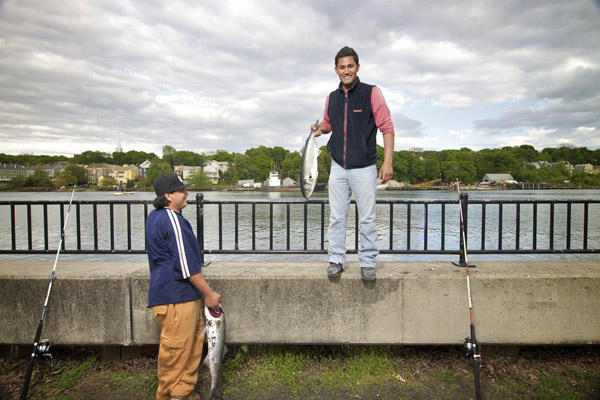
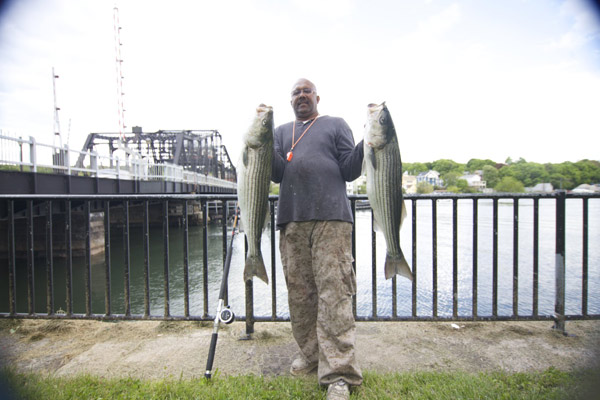
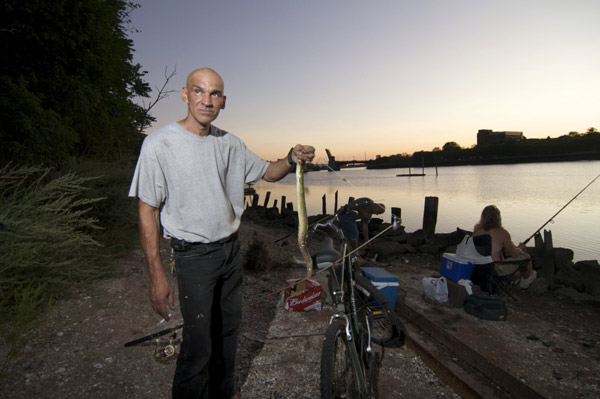
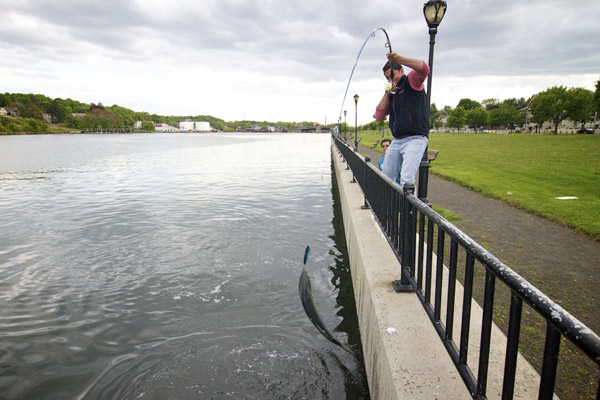
The lower Quinnipiac River offers a bounty of fin-laden delights, such as bluefish and bass – tempting possibilities for a low-cost, high-protein family dinner, but eating these fish too often can be a serious health hazard.

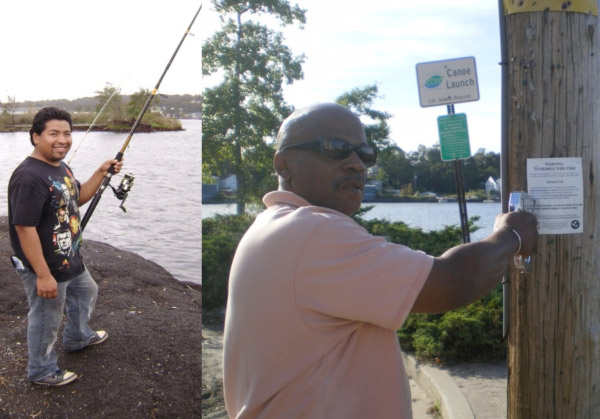
To shed light on Quinnipiac’s fish contamination and consumption risks, the Connecticut Coalition for Environmental Justice (CCEJ), with support from the Quinnipiac River Fund, launched a safe fishing project from 2010 – 2012. Through casual one-on-one conversations, brochure distribution and multi-lingual signage, the CCEJ helped hundreds of fishers on the Quinnipiac River understand the hidden dangers they may be ingesting.

Even when pollution is miles away or many years past, fish can harbor levels of cancer-causing chemicals – such as mercury and polychlorinated biphenyls (PCBs) – thousands of times higher than the water. Chemical spills can elevate PCB levels in fish for years after the spill has ceased, and mercury in air pollution can travel long distances before being deposited into the river.

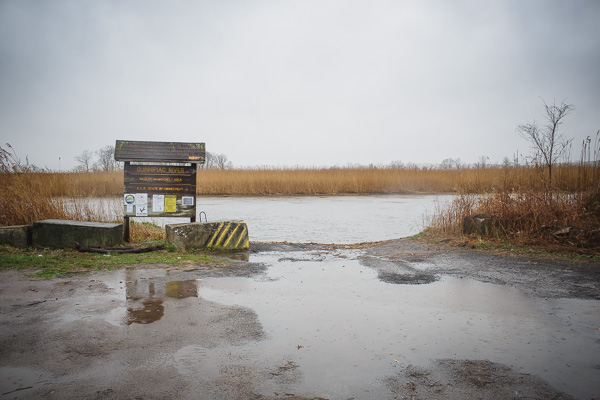
In Meriden, north of the Quinnipiac River Gorge, a history of heavy pollution makes eating any caught fish (other than stocked trout) ill advised. In the lower Quinnipiac, tidal waters help lessen some pollution, but fish consumption risks still remain high. The CCEJ focused its education efforts on this area, where the river’s proximity to highly populated urban areas and low-income neighborhoods makes fishing for food a popular activity.

To lead the education efforts, CCEJ brought on lifelong fisherman Robert Hudson, who brought an angler’s attitude to the task. Donning casual clothes and often carrying a fishing pole, he spoke with nearly 170 fishers, most of whom said they were not aware of the safe fishing guidelines.

Tidal in nature, the lower Quinnipiac bears the same fish-eating cautions as the Long Island sound: most saltwater fish are safe to eat, except for bluefish longer than 25 inches and striped bass, which should not be eaten by pregnant women, women who plan to become pregnant or children under the age of six. For everyone else, the Department of Public Health recommends no more than one meal a month of these large fish.

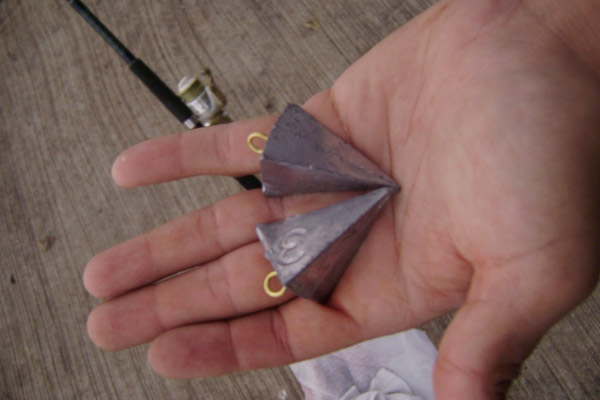
Hudson provided fishermen with pamphlets explaining the guidelines, and also explained a practical and simple way they could help reduce contamination of the river and river-caught fish: by switching their lead weights to alloy-encased ones.

Hudson’s education work helped inform CCEJ’s effort to promote a state bill to restrict lead fishing weights, similar to measures that have passed in Maine and New Hampshire. CCEJ also worked with the State Department of Environmental Protection to ensure fish signage is posted in fishing areas in English and Spanish.

The Quinnipiac River Fund has granted $27,000 to the Connecticut Coalition for Environmental Justice for its safe fishing project and broader activities building environmental awareness and safeguarding the health of residents who use the Quinnipiac River.