No to Residential Waste Along the Quinnipiac

Quinnipiac River Fund member testifies against trash hauler’s application to accept household garbage

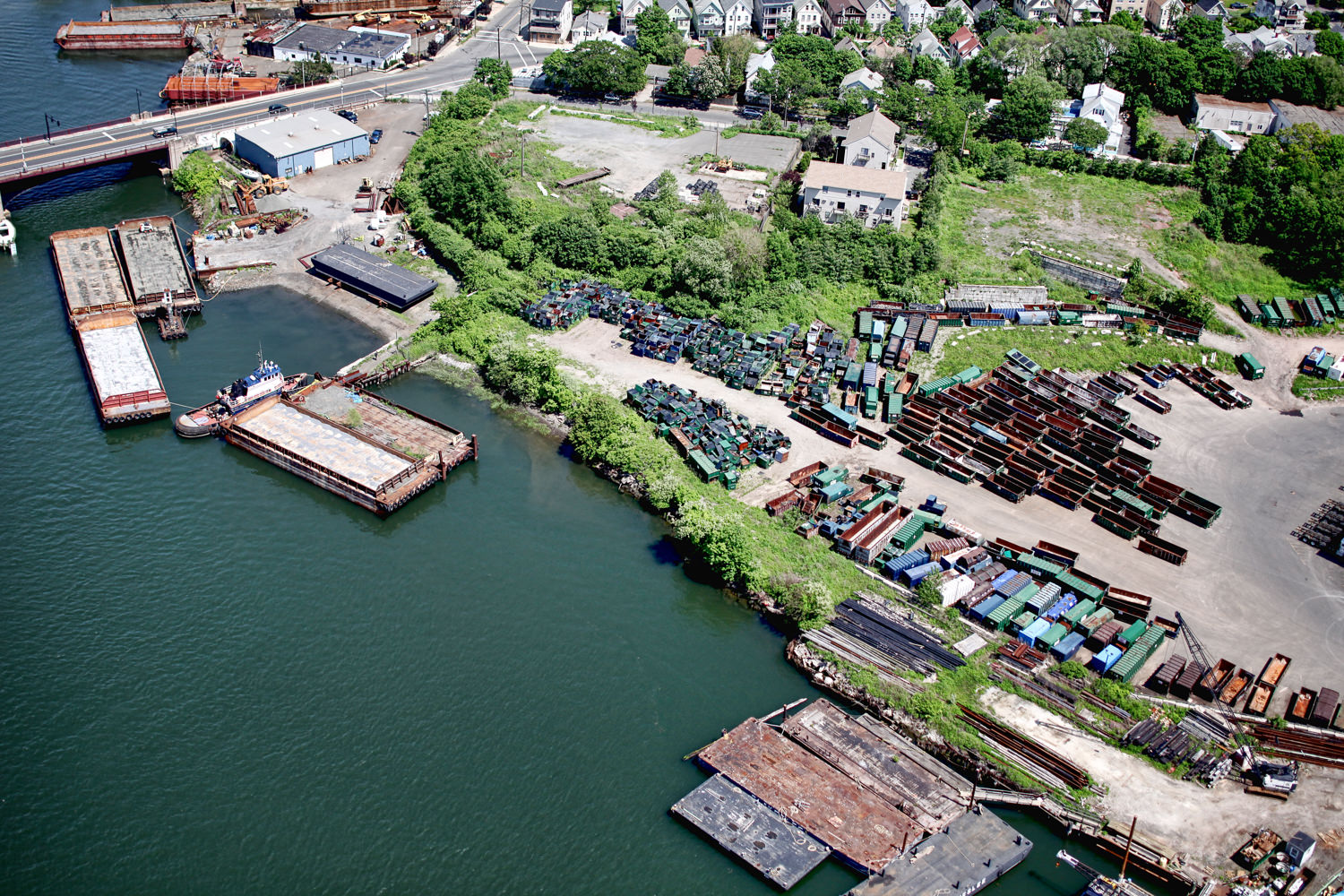
A proposal by Murphy Road Recycling, located adjacent to the Quinnipiac River at 19 Wheeler Street, to accept “wet” garbage from suburban households is meeting with strong community opposition. On behalf of The Quinnipiac River Fund, advisory committee member Nancy Alderman joined with other public intervenors to question the applicant at the Nov. 19 New Haven City Plan public hearing. Alderman also submitted written testimony in opposition to the application.

Testimony-from-Nancy-Alderman-concerning-the-Wheeler-St

Read Murphy Road Application

Murphy Road Recycling is seeking a permission to allow up to 500 tons a day of wet garbage, including diapers, into the Annex neighborhood facility. During the November 19th City Plan meeting, conducted via zoom, city officials and environmental activists questioned Murphy’s claims “that this will not adversely affect the neighborhood,” claims Murphy attempted to verify with letters from satisfied neighbors living near their facilities in other towns. Independent consultants, hired by the city, debunked this evidence by demonstrating that these other sites have at least a quarter mile buffer between the plant and residential properties. At Wheeler Street, the nearest houses are a mere 350 feet away from the plant, and less than 100 from the dumpsters of All American Carting, which shares the property, and is expected to be a part of the proposed expansion.

With such close proximity, the impact of Murphy’s operation is already problematic to the neighbors who cite noise, traffic, vermin and noxious odors.

“It smells most of the time, especially at night,” said a Fairmount Avenue neighbor. “And the noise. It starts like 3:30, 4:00 in the morning, banging dumpsters around. It’s awful.”

“Our exterminator bill is higher than our mortgage” declared another neighbor.

With prevailing westward winds pointing the stench directly at nearby homes, and organic waste offering a gourmet feast for pests, Murphy’s proposed expansion would further plummet both quality of life and property values in the area. According to independent reviews, the allowance of putrescible waste in Murphy’s current plans “likely will violate city zoning laws around outdoor storage of waste in proximity to current residential properties.” (Green, New Haven Independent)

City consultants also revealed a disturbing environmental concern. Even now, “a large portion of the northern parking lot does not drain into the site’s existing catch basins, but rather discharges untreated runoff to an adjacent property, which in turn sends that runoff into the river.” If applications are approved, “adding wet trash to the allowable mix of materials processed at the transfer plant could result in contaminated runoff.” (Green, New Haven Independent)

With long and heated discussion, public testimony was delayed until the December meeting. However, a half dozen concerned community members, called “intervenors,” were able to share their concerns and questions. Among them, Nancy Alderman from the Quinnipiac River Fund, who in light of the existing run-off issue, inquired whether the trash would go on the ground, and, if so, would their be liners. Murphy’s answer, no liners, and yes to garbage on the ground, but only when inside the transfer building. Alderman’s written testimony also highlighted the probability of increased asthma rates from the air pollution of diesel exhaust and open trash heaps.

Testimony-from-Nancy-Alderman-concerning-the-Wheeler-St
Read about the article by Thomas Green in the New Haven Independent.
Hear recorded testimony from Wheeler Street neighbors. https://www.wevideo.com/view/1927715823
Marking Time On The Quinnipiac River: One Bridge Opening At A Time

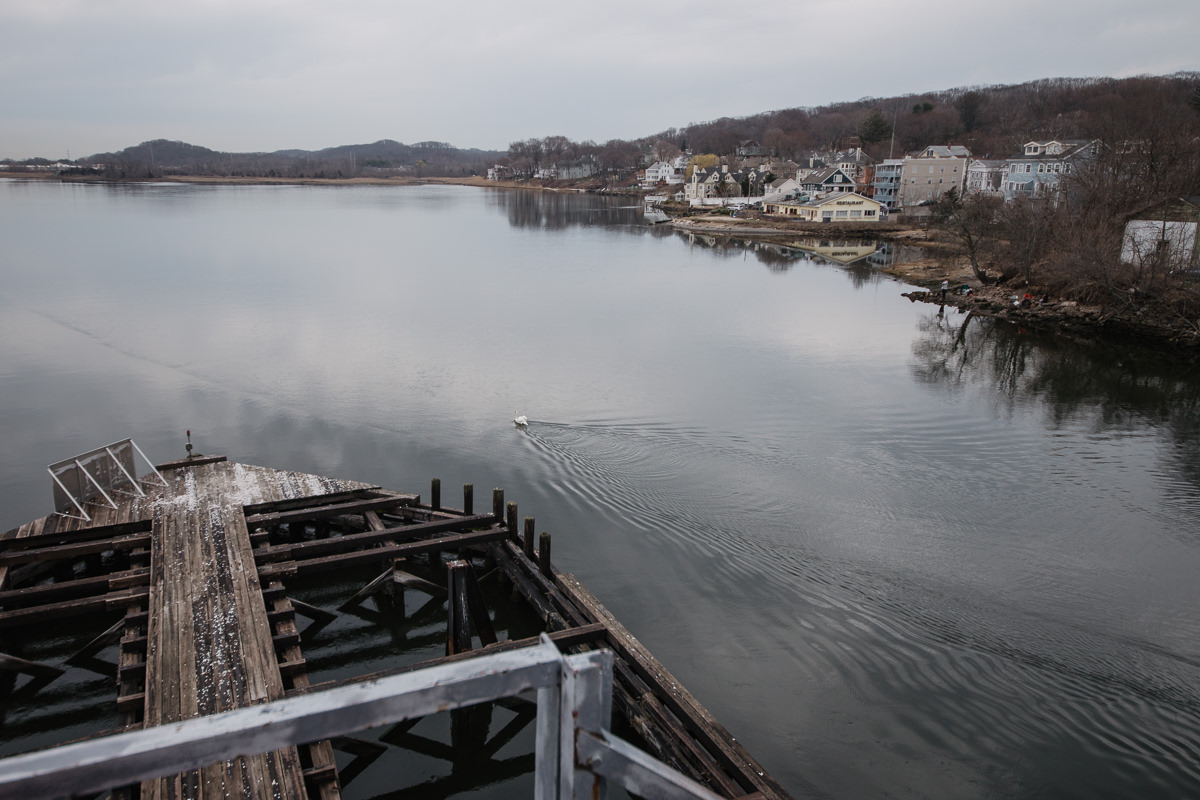
Connecticut Public Radio — When a boat needs to pass under a low bridge on a river, that bridge needs to move out of the way. A drawbridge lifts up so a boat can pass under. A swing bridge pivots out of the way so a boat can pass by. But these decades-old bridges don’t operate on their own. They rely on a small group of “bridge tenders” who specialize in a peculiar and slow-moving job.

On Duty with New Haven’s Bridge Tenders

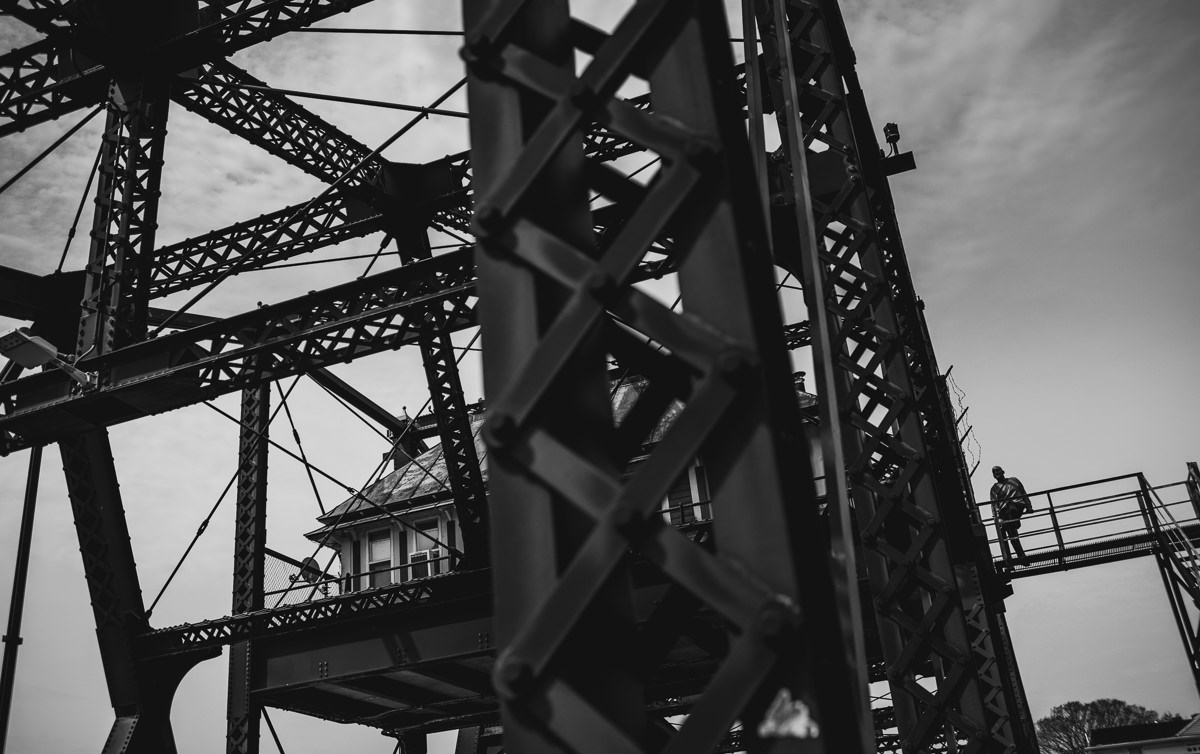
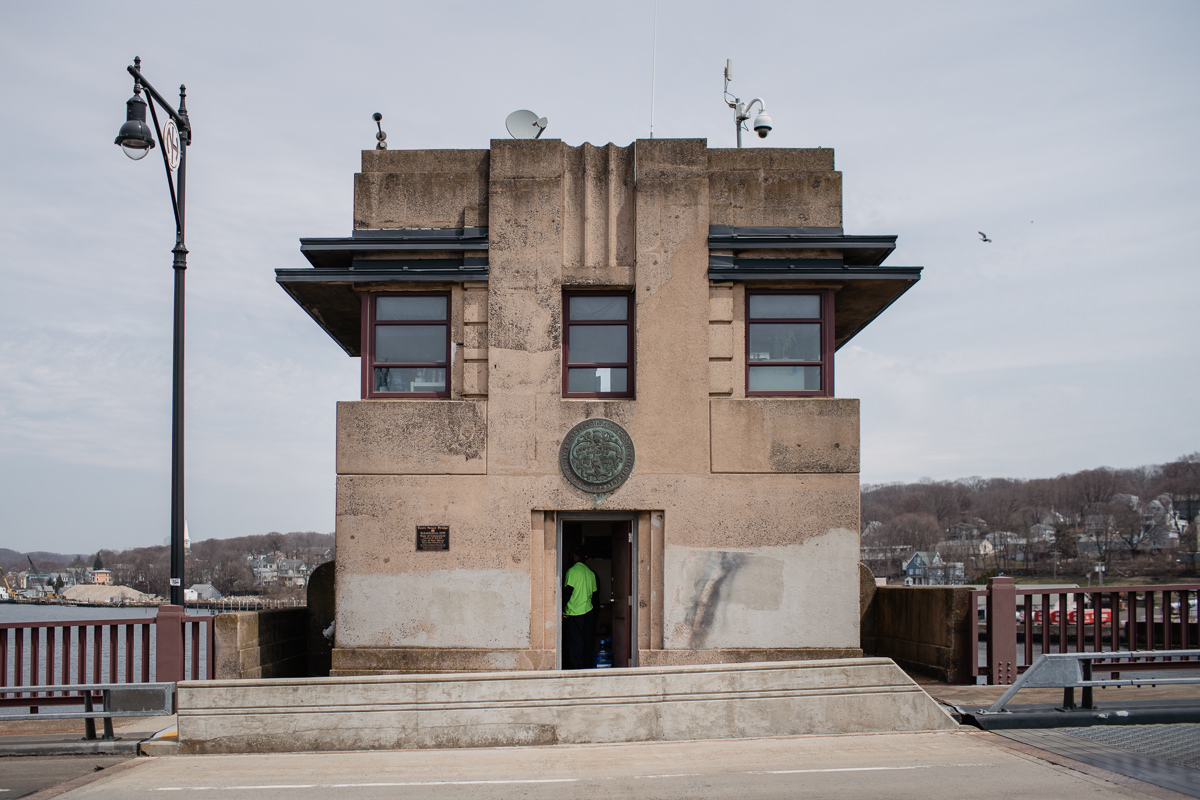
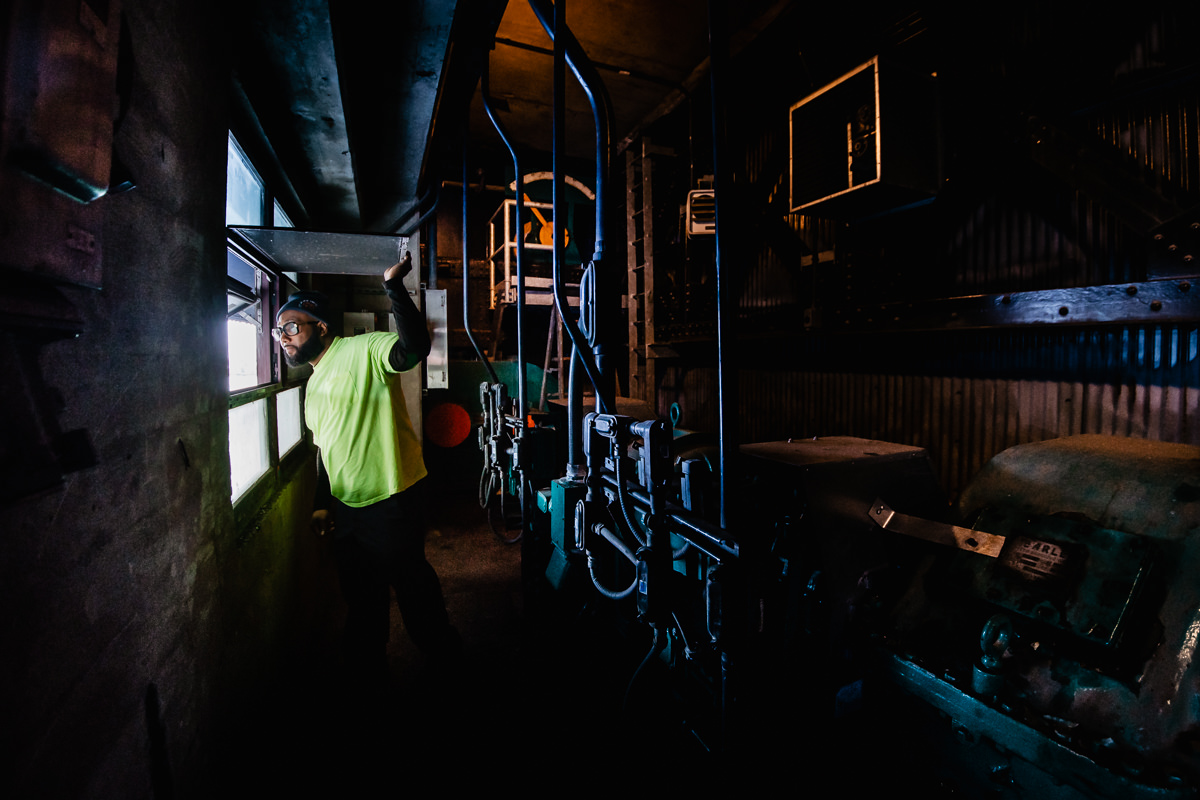
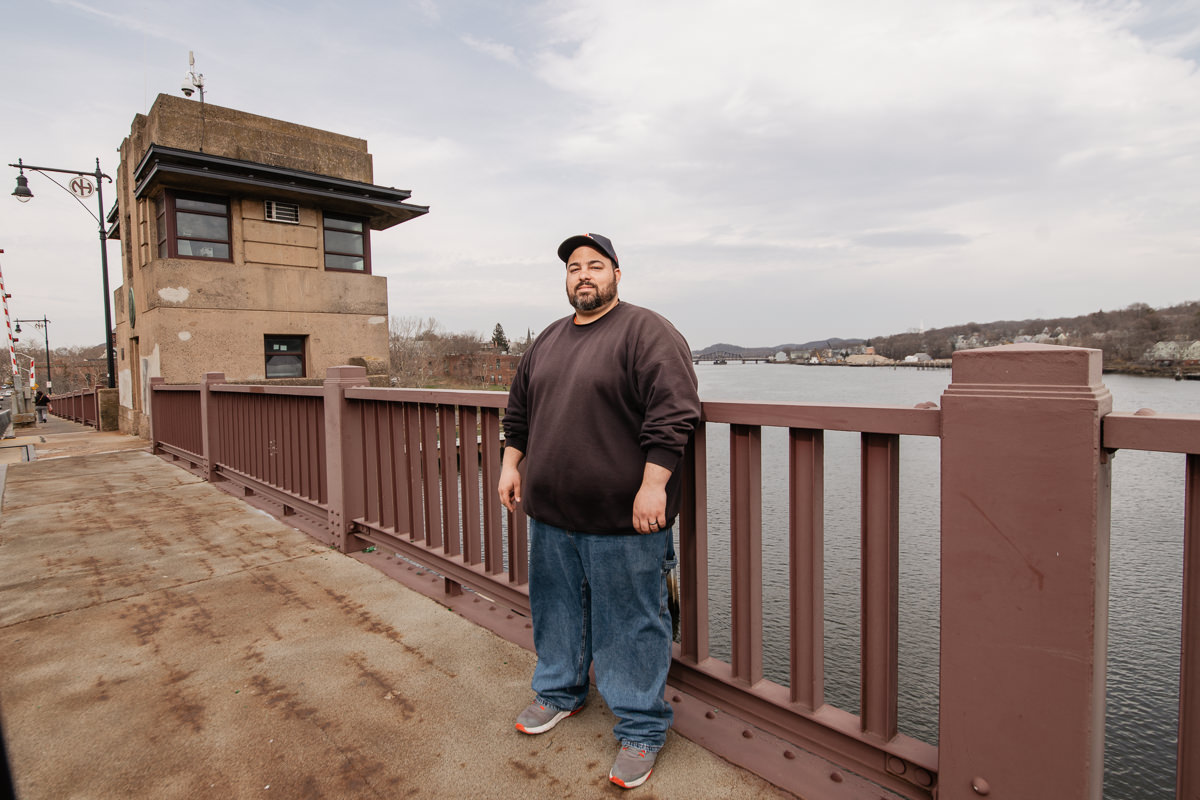
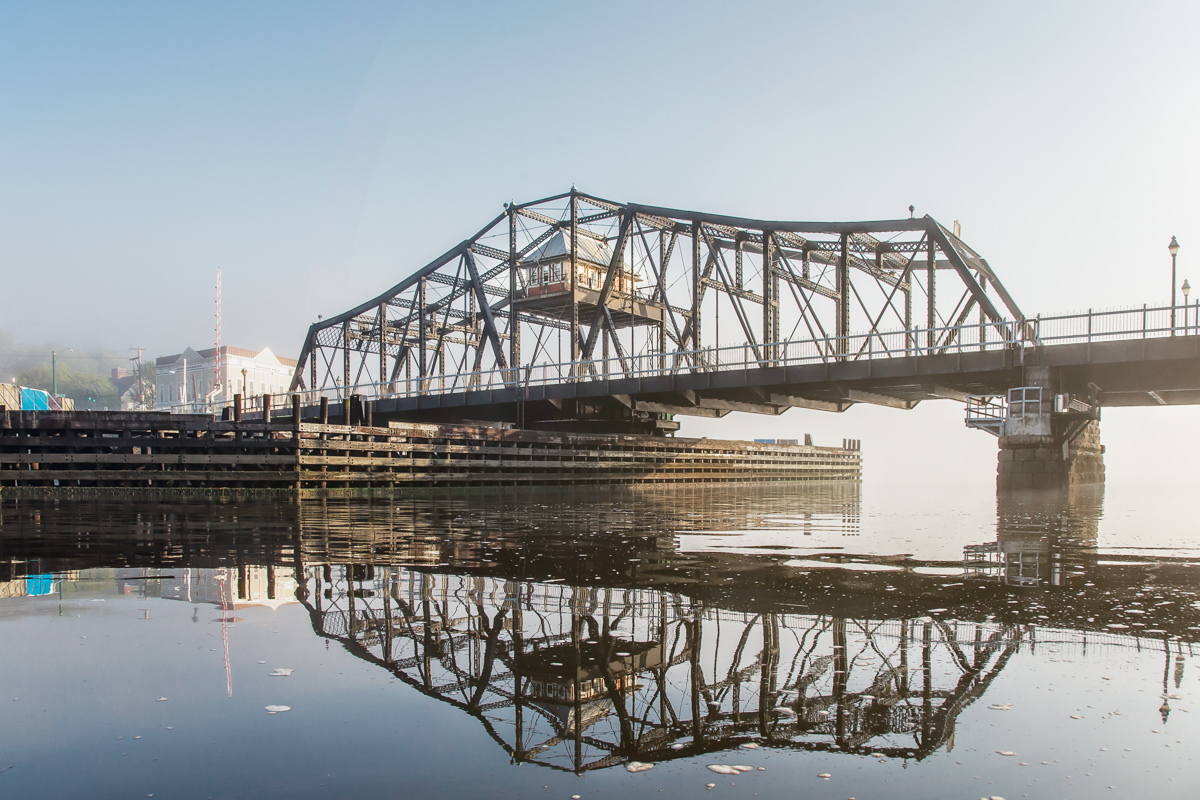
“Everybody wonders who lives in the house,” said Mike Dorsey, one of New Haven’s ten bridge tenders who keep New Haven’s moveable bridges moving. While not a residence per say, the curious orange building perched in the through-truss of the Grand Avenue Bridge serves as a home away from home for the bridge tenders on duty. Similar control houses are located on the Chapel Street and Ferry Street bridges.

But what’s life like for the ones who keep watch above the rivers?

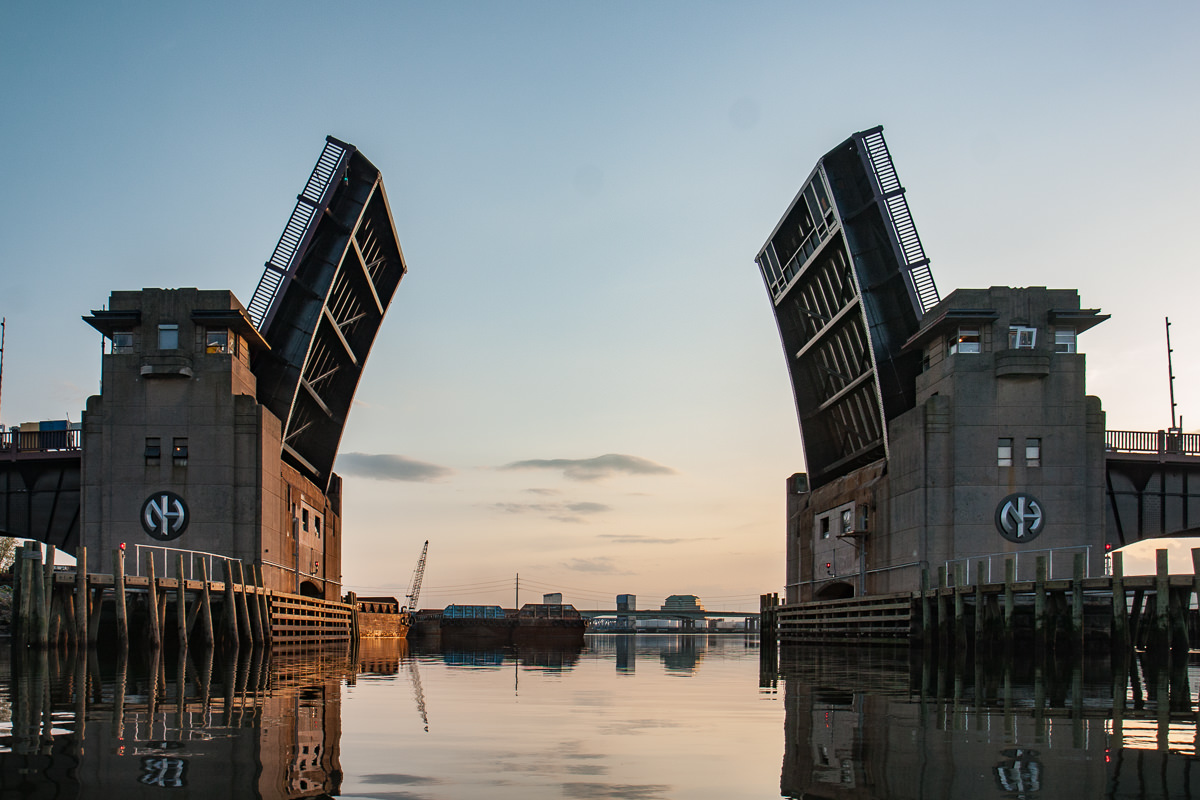
“It never closes,” Mike explains. 7 days a week. 24 hours a day. 365 days a year a bridge tender is available to ensure that boats can pass to and from the harbor and the Quinnipiac and Mill Rivers. A division of New Haven’s public works, bridge tenders operate the city’s three movable bridges: the Chapel Street and Grand Avenue swing bridges which pivot at the center to open and the Ferry Street double-leaf bascule bridge which uses a counterweight for its upward swing. The Tomlinson Bridge on Route 1 represents another type of movable bridge, a vertical lift bridge, but being state-operated, it does not fall under city jurisdiction.

New Haven’s bridge tenders work all three city bridges in three shifts. Each bridge is staffed for the first two shifts: 5 am – 1 pm and 1 pm – 9 pm, with only the Chapel Street Bridge manned during the third shift, 9pm – 5 am. As such, third shift duties include leaving the Chapel Street post as needed to open the other two bridges for any late night boat traffic.

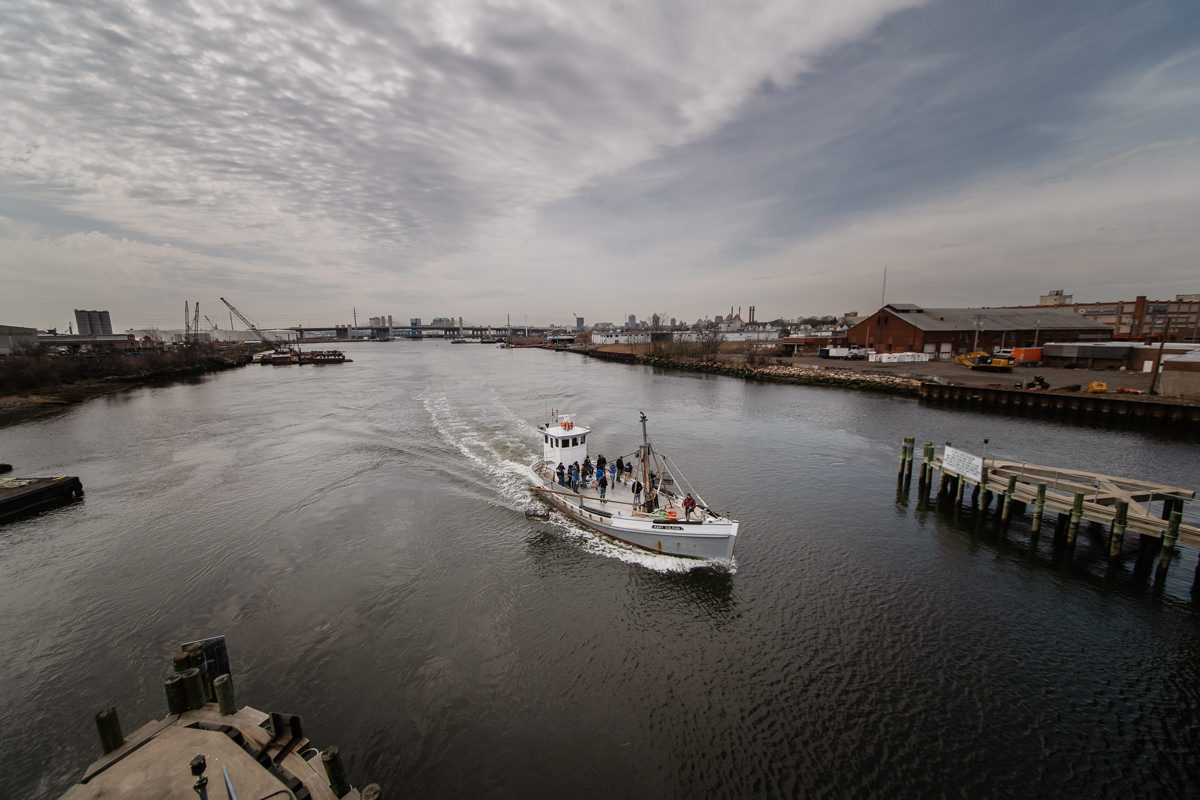
Moveable bridges play a critical role in preserving the character of the Fair Haven and Fair Haven heights community. Whether its tugboats, barges, oyster boats or personal fishing craft, to maintain a vibrant water-based community, the boats must get by. And when they do, the bridge tenders know them by name – both the boats and their operators. “We know everybody that comes through here,” said Mike. “We have a good relationship with all the boats”

While the vessels appreciate the bridge tenders, vehicles and pedestrians don’t always share the sentiment, especially when the bridge opens during peak traffic. But despite the inconvenience, the bridges form and function still inspire much public appreciation. The Ferry Street and Grand Avenue bridges in particular, both built as replicas of the original bridges 1920 and 1900 bridges respectively, add scenic beauty and are key features in the Quinnipiac River Historic district.

Anthony Lesko, one of the city’s newest bridge tenders, has a long family history in the Quinnipiac community. “I grew up in the neighborhood,” he said, explaining that his family has lived in the same house on Hemmingway for generations. “My grandfather told me stories that they used to ride the bridge…and now I get to open them.” Of course, Anthony’s job includes preventing others from following in his grandfather’s bridge-riding footsteps.

Still new to his role, Anthony receives lots of questions when people learn of his occupation, some of the most common being, “How do you know when to open the bridge?” and, “Is it difficult?”

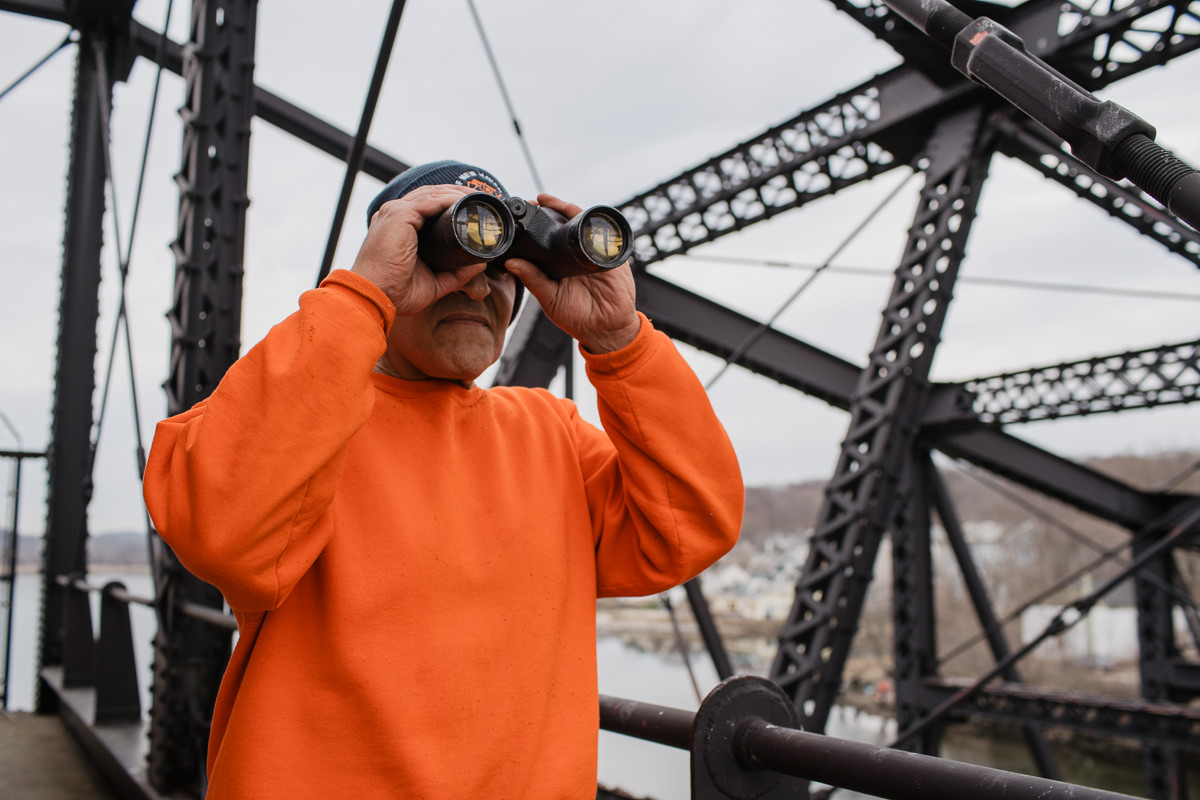
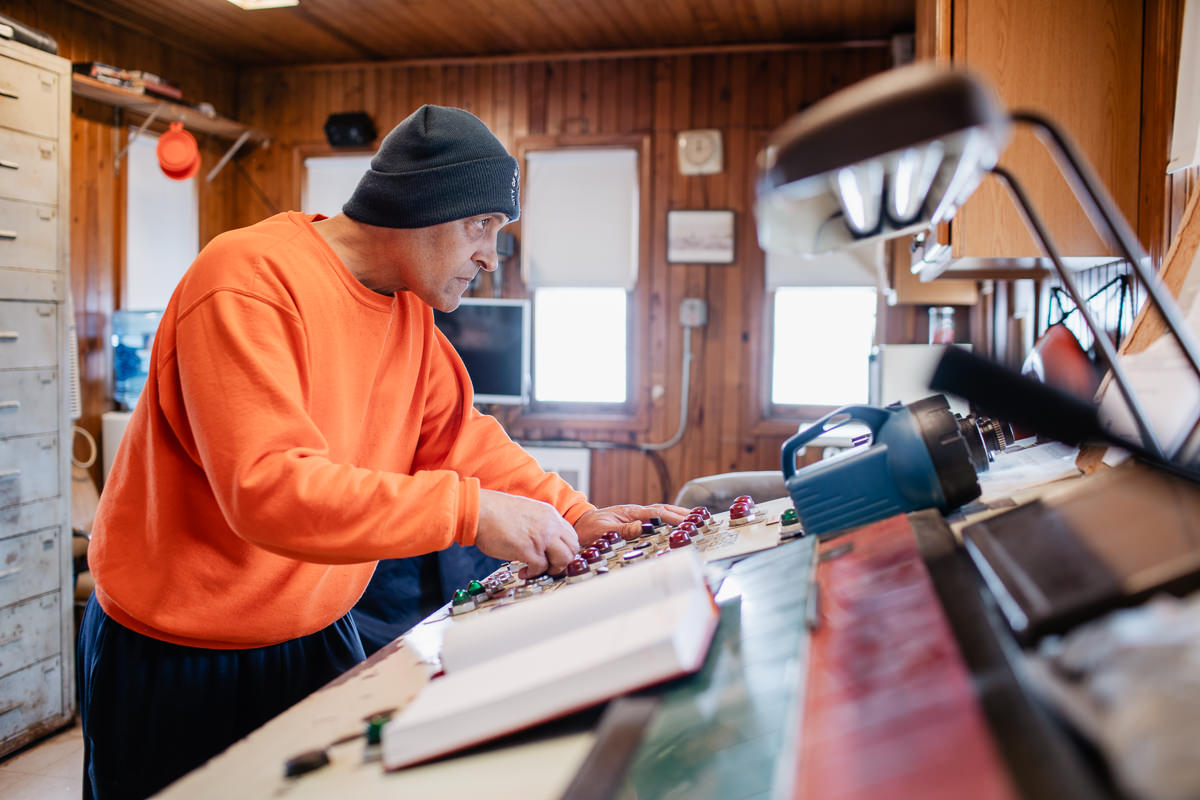
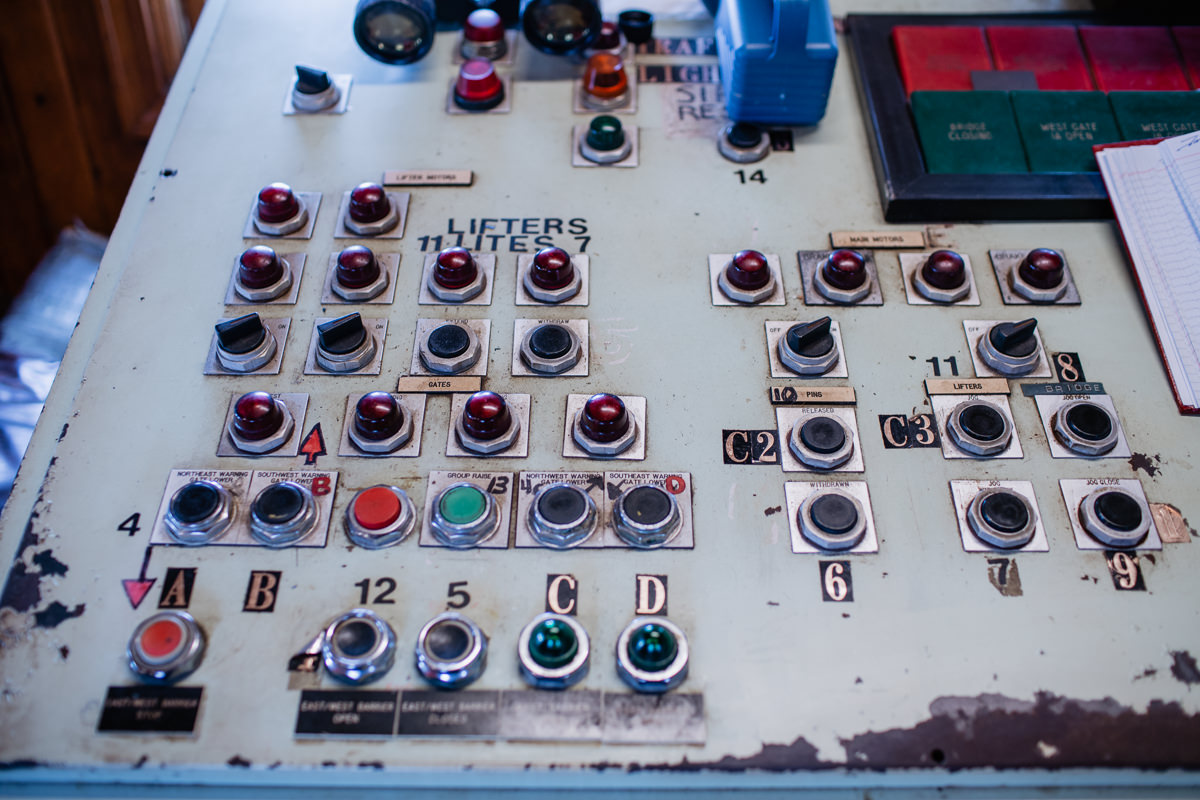
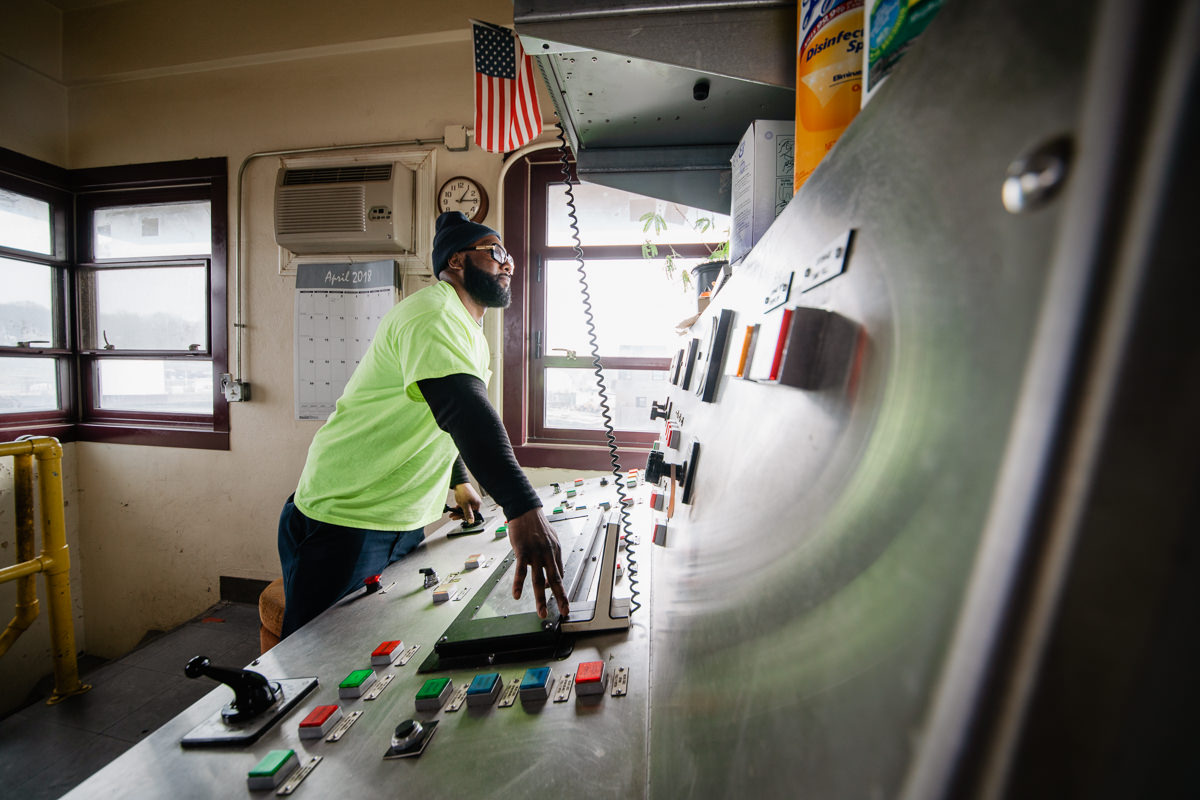
Requests to open the bridge come by phone call (with the phone number posted on signs located on the pier of each bridge) or, more commonly, by radio. When a request comes in, the bridge tender first calls fire communications to inform them of the opening so that emergency response can be diverted to a different route. The tender then enacts a visual check to make sure the bridge is clear. Depending on the bridge, the opening itself requires a series of 9 – 12 buttons or levers. Once the boat passes through and confirms it’s cleared the bridge, the bridge tenders close the bridge and lift the gates. A final call to fire communications announcing traffic completes the process.

In addition to ensuring that the bridges open and close properly, designated bridge tenders provide routine maintenance, which includes cleaning and lubricating the wedges and the fittings (or the expansion-bearing assemblies) and cleaning debris from the bridge drainage system. Sometimes the bridge tenders encounter some unexpected “duties,” such as calling animal control for a stray dog in danger of slipping through the bridge fence or chasing away the intrepid raccoons that climb the trusses, explains Bob Bombace, who may be more keen to notice the four-legged intruders considering his previous position as an animal control officer.

Some seasons also bring unexpected sights — such as a sweltering summer day when the fire department had to hose down the overheating metal trusses of the Grand Avenue Bridge or Christmas of 2017 when Santa Clause traded sleigh for boat and sailed into the Marina — but overall most days are rather routine. Daily bridge openings range from four on a slow day on the Grand Avenue Bridge to upward of ten on a busy day for the Chapel Street Bridge. Since each opening takes approximately 10 – 15 minutes, the bridge tenders have a lot of downtime. When not pushing levers or logging the openings, they occupy their time working on laptops, reading, playing guitar, or simply contemplating. “It’s a thinking job,” Mike says, who, with four years on the job, has observed and contemplated many of the ins and outs of the bridge operations. It takes 12 seconds for the traffic gates to come down, Mike has counted, and when there are four bars visible on the Ferry Street Bridge pier, the Mary Colman oyster boat can pass under the bridge without it opening.

For Anthony, the currents are the most captivating observation. “If you’ve never experienced the power of the river, walk across one of the bridges at the tide change,” says Anthony. “Sometimes you can actually hear the current from up here inside the house.” For the bridge tenders, keeping a keen ear and eye on the currents and other environmental factors, such as snow, ice and wind come with the territory. They adjust the swing bridge openings based on the water velocity and during heavy snowfalls won’t open the bridge due to the excess weight.

At every opening, regardless of the weather, the tenders must stay alert. We listen while the bridge opens for certain noises that might indicate a problem, explains Bob. “Each of the bridges has its idiosyncrasies,” he adds.

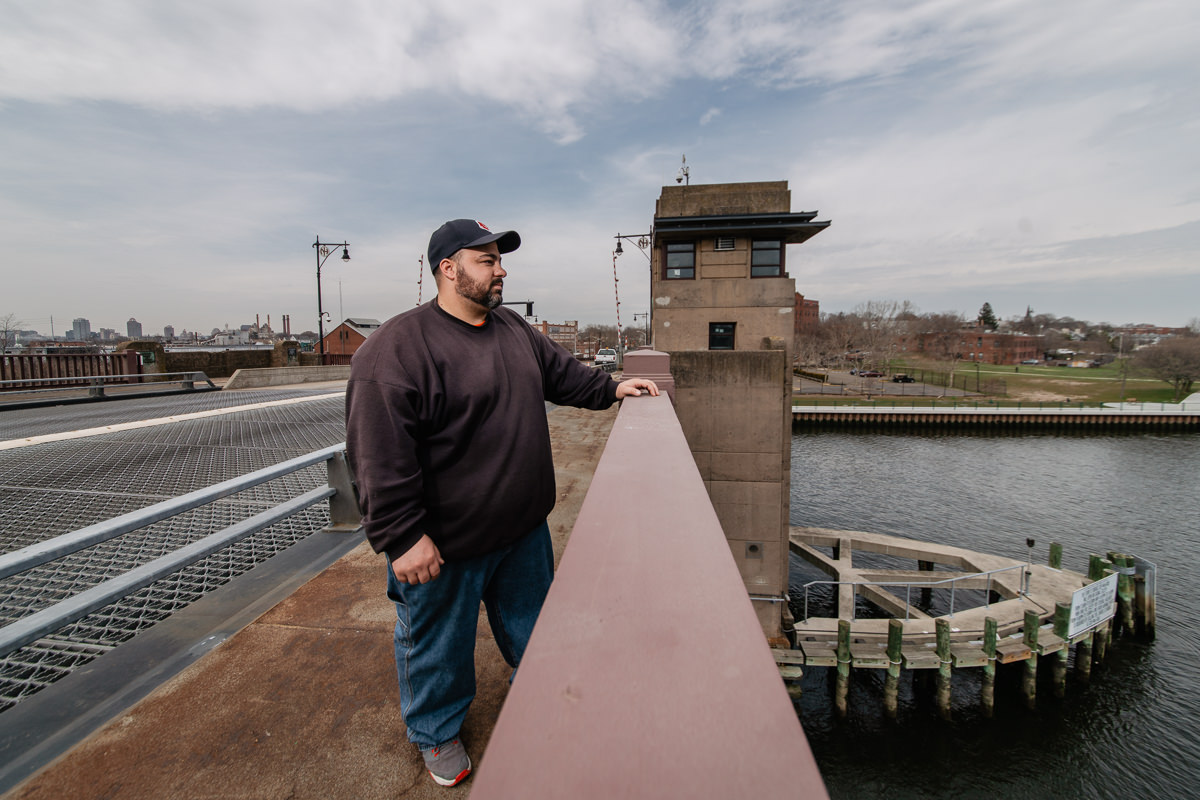
Bob’s been working the bridges for eight years now and, while he admits he grows accustomed to the views, he still harbors a great appreciation for his office. “It’s a nice situation to work in, to be by the water.”

Photos by Ian Christmann


Canal Dock Boathouse Rises, Wows

New Haven Independent

The new Canal Dock Boathouse is getting closer to the finish line, and it is a thing of beauty.

I got to join a sneak preview of the waterfront gem on Thursday afternoon. I’d show you what I saw, but they allowed no photos. But I can tell you about it.

Construction of the new $37 million two-story, 30,000 square-foot boathouse — which replaces the historic Adee Memorial Boathouse the state tore down in 2009 along the Quinnipiac River to make room for the expansion of the I-95 Pearl Harbor Memorial “Q” Bridge — is in its final stages.

Thursday afternoon’s tour was arranged for Mayor Toni Harp and U.S. Rep. Rosa DeLauro, state Department of Transportation and city officials, along with a couple of members of the press to check out what three years of toil has produced. (Read more about the making of the boathouse here and here.) The city was able to get the funding for the project to mitigate the impact of building the “Q” bridge and that money had to be used specifically for rebuilding the boathouse and improving the shoreline.

When the boathouse opens tis summer there will be elements that harken back to the grandness of the original Adee Memorial Boathouse along with new elements that make the building a showplace of this current age. Gregg Wies and Gardner are the architects who designed the building. Nosal Construction is the contractor.

Continue reading on The New Haven Independent.

Plan Previewed For Deepened Harbor Channel

New Haven Independent.

You dredge, deepen and extend the New Haven harbor channel to bring in bigger ships leading to more efficient business.

Then you take the sand, silt, and other stuff you’ve hauled out of the depths and use it to shore up washing away beaches, to create new shellfish habitats and salt marshes. Who knows? Maybe you even find three of Fort Hale’s three missing 1779 cannon.

That rosy picture of an invigorated harbor all depends on one big “if”: If the dredged out material is biologically safe —non-toxic, and suitable for such beneficial uses.

That maritime hope tinged with anxiety animated a public information session convened by the U.S. Army Corps of Engineers and the Ports of Authority of the state and city.

About 50 people gathered in the auditorium of the Nathan Hale School Wednesday night for a status report on the “National Environmental Policy Act Scoping New Haven Harbor Navigation Improvement Feasibility Study and Environmental Impact Statement (EIS).”

That mouthful is a $3 million study, shared equally by the feds and the state, with no cost to the city, to deepen New Haven’s main harbor channel from its current 35-foot depth to depths up to 42 feet.

Read full article in New Haven Independent

Few Connecticut polluters penalized for toxic wastewater violations, EPA data shows

Nearly half of the 60 companies that are allowed to discharge wastewater directly into Connecticut’s rivers, brooks and other bodies of water exceeded the amounts of toxic metals or other pollutants that their permits allowed over the last three years, a C-HIT analysis of federal data shows.

Despite the violations, the state Department of Energy & Environmental Protection fined only two of the 29 companies found to be in noncompliance with their permits—a record that state environmental advocates called alarming, but that the agency said is justified.

The 29 companies discharged excessive amounts of pollutants during at least one three-month period from October 2013 to September 2016. At least 19 companies exceeded by more than 100 percent the amounts they were allowed to discharge, according to the U.S. Environmental Protection Agency data.

The data also show 23 of the 60 companies were found in noncompliance with terms of their permits for at least half of the three years—for reasons ranging from excessive discharges to submitting late discharge reports. Thirteen companies were found in significant noncompliance—the most serious level of violation—for three months or more.

While DEEP has the authority to fine or take court action against polluters, EPA records show it more commonly issues notices of violation or noncompliance or warning notices, opting to work with violators for months or years to correct the problems. Continue reading.